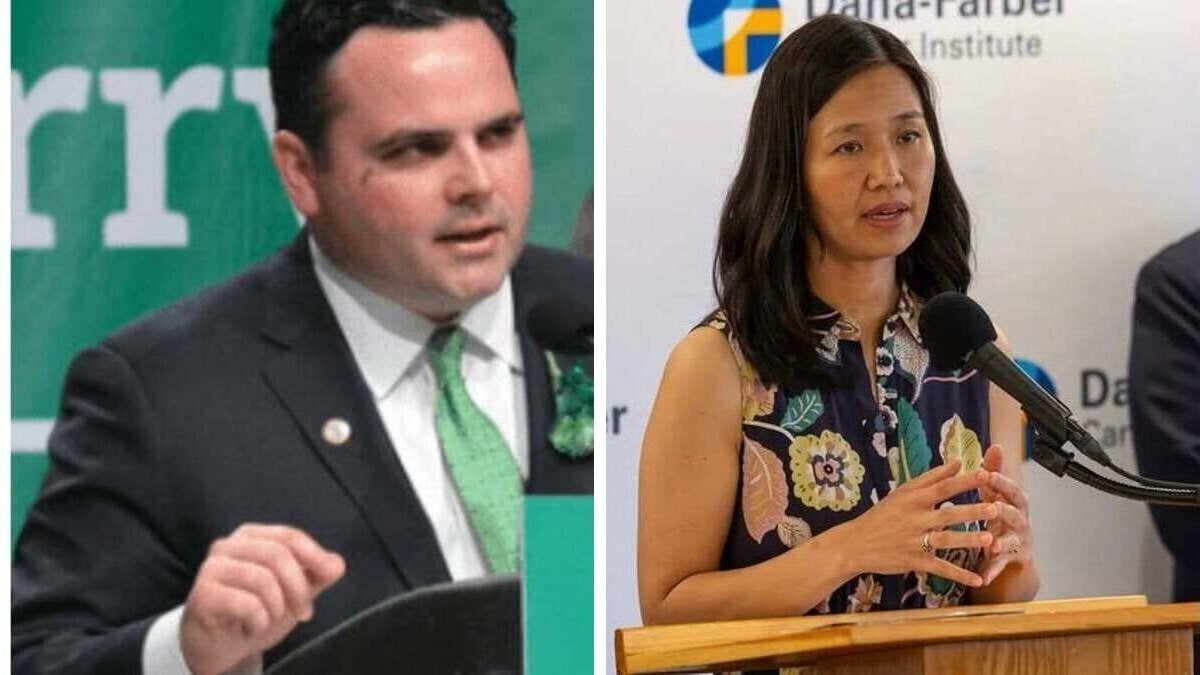
BOSTON — Sen. Nick Collins pushed a Boston property tax relief package through the state Senate on a unanimous vote this week — the largest homeowner tax break Beacon Hill has passed for the city in years.
The amendment, announced by Collins in a Facebook video Thursday night, triples the senior tax exemption to $1,500, taps Boston's $1.7 billion reserve fund for direct homeowner rebates, triples the personal property tax exemption for city small businesses, and gives homeowners 75 more days to fight their assessments.
"The Massachusetts Senate unanimously passed municipal property tax relief legislation for the second time this session," Collins wrote in the post. "I'm asking Mayor Michelle Wu and the City of Boston to put the people before politics and support this common sense legislation."
The amendment is co-sponsored by Republican Senate Minority Leader Sen. Bruce Tarr and now heads to a House-Senate conference committee before landing on Governor Maura Healey's desk.
The $1B budget balloon behind the tax hikes
The Senate action comes against a specific fiscal backdrop.
Since Wu took office, Boston's operating budget has grown from $3.76 billion to a proposed $4.8 billion — over $1 billion in additional annual city spending in four years, funding expanded payrolls, new departments, climate initiatives, and long-term commitments. The city is running a $50 million deficit.
The tax hikes followed. Boston single-family homeowners took a 10.4% average increase in 2025 and a 13% increase in 2026 — Wu's second straight double-digit hike, and a 34% cumulative jump since 2023. The average single-family home is paying about $780 more this year.
MASSDAILYNEWS
STAY UPDATED
Get Mass Daily News delivered to your inbox
ADVERTISEMENT · Interested in advertising?
ADVERTISEMENT · Interested in advertising?
Wu's own fix — a temporary shift of the tax burden onto commercial real estate, passed by the Boston City Council and the state House three times — was killed twice in the state Senate. Collins made procedural moves that blocked votes; Senate President Karen Spilka ended the second attempt in December for lack of Senate support.
Assessment inequity
On the Senate floor and in his Facebook post, Collins argued Boston's assessment practices are the deeper problem.
"The facts are these: the city is giving wealthy homeowners in Back Bay and Beacon Hill a tax cut by under-assessing their property dramatically," Collins said. "At the same time, these unfair assessing practices by the city are hammering the middle class, taxing them to the max or more — communities like Dorchester, Roxbury, Mattapan, South Boston, the South End."
The examples Collins cited:
- A Back Bay home valued at $20 million was assessed by the city at $12.5 million.
- A Beacon Hill property that sold for $20 million was later assessed at $5 million.
- A Roslindale home that sold last year for $435,000 was assessed at $485,000.
ADVERTISEMENT · Interested in advertising?
ADVERTISEMENT · Interested in advertising?
The Pioneer New England Legal Foundation is suing the city on behalf of commercial owners who allege Boston's Assessing Department added assessed value — and taxes — to properties that had already won abatements. Boston's Commissioner of Assessing, Nicholas Ariniello, announced his departure in May after 20 years at the department, one day after city attorneys filed a response to allegations that the Assessing Department punished appealing property owners. Collins on Thursday called it a "resignation in disgrace."
"This will cost the city," Collins said. "But while the former assessor skips town, taxpayers will suffer."
Wu's primary challenge to Collins
The Senate vote comes as Wu is backing Collins' primary challenger.
Wu endorsed Latoya Gayle, a first-time candidate, to unseat Collins in the Sept. 1 Democratic primary. As Mass Daily News previously reported, Gayle is a registered Beacon Hill lobbyist and the paid in-house advocacy director at Neighborhood Villages, an early-education nonprofit that received roughly $13 million in state appropriations between 2021 and 2025 — some of it under a budget line named after her employer. Gayle's own lobbyist registration lists "annual appropriation legislation" among the things she was hired to push. She stopped disclosing her political contributions on her lobbyist filings the year she began organizing her Senate run.
Gayle's campaign manager, Maccon Bonner, served in Wu's administration before joining the campaign. Wu has also endorsed her former senior aide Daniel Lander against Sen. William Brownsberger, the Senate President pro tempore who joined Collins in blocking Wu's tax shift.
The primary is less than six weeks away. The tax relief bill is in conference committee.
Loading Comments