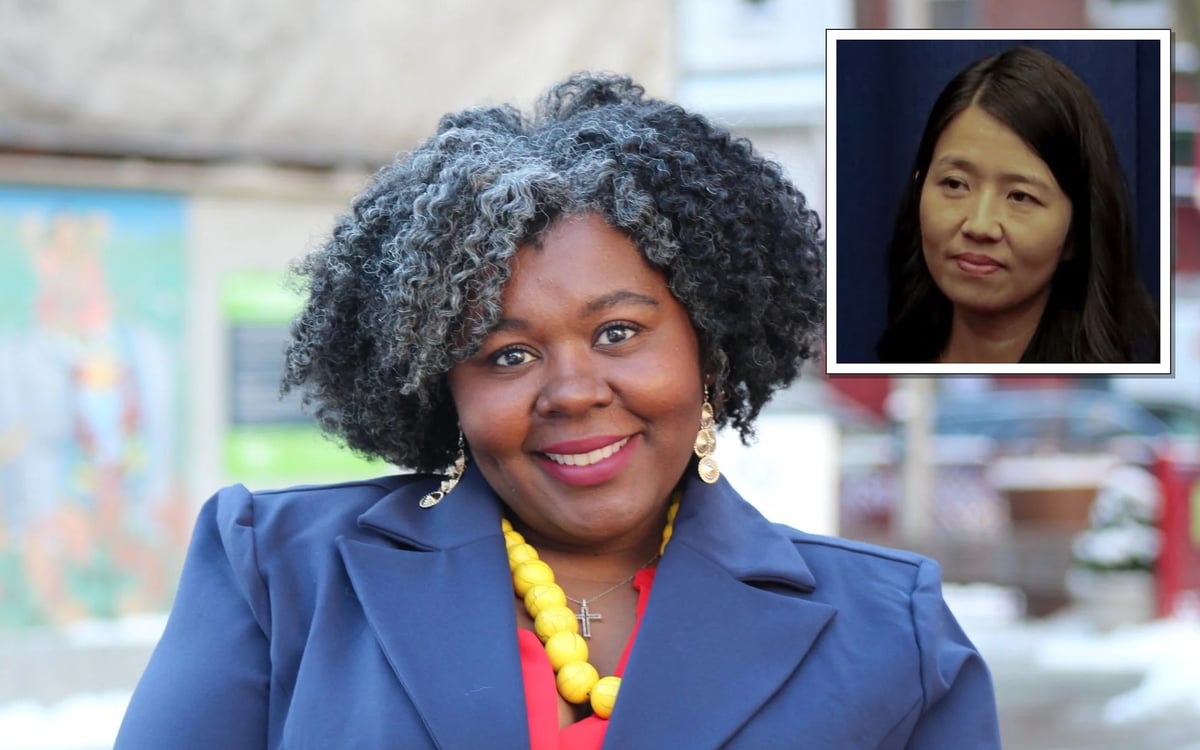
Sen. Nick Collins has spent his career doing the unglamorous work of representing the 1st Suffolk — South Boston, Dorchester, Chinatown and the South End — and answering to the people who live there rather than to the mayor's office. His reward is a primary challenge backed by Michelle Wu, who could not move her agenda through him and has decided to move him out instead.
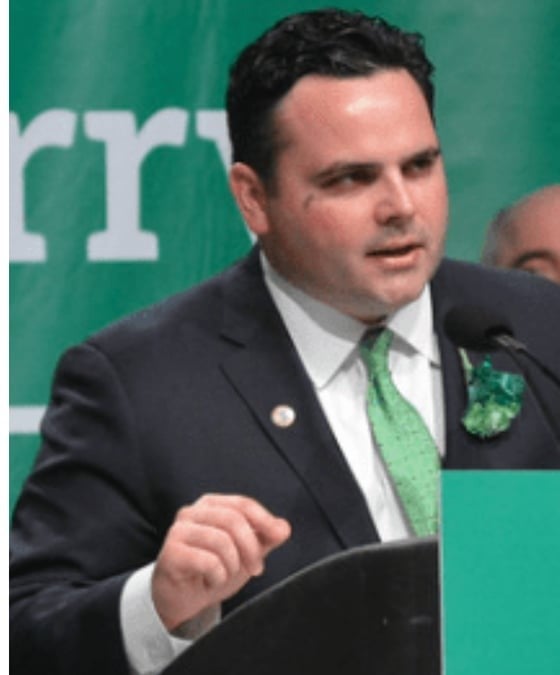
Sen. Nick Collins led the state Senate in rejecting Mayor Wu's property-tax hike, 33-5. File photo
Her chosen instrument is Latoya Gayle, and Gayle would like voters to see a neighborhood mother turning "lived experience into meaningful change," an outsider ready to shake up Beacon Hill. It is a tidy story, and it holds up only as long as no one reads her state filings.
Gayle is a registered lobbyist. For years she has worked the State House as the in-house advocacy director for Neighborhood Villages, an early-education nonprofit that has paid her more than $100,000 a year, and her own registration spells out what she was hired to push — "legislation and policy designed to promote access to early education and care, as well as annual appropriation legislation." Stripped of the euphemism, she was paid to lobby the state budget.
The effort paid off handsomely for her employer. The state comptroller's own checkbook shows the Commonwealth routed roughly $13 million to Neighborhood Villages between 2021 and 2025, nearly all of it through the Department of Early Education and Care — the very agency whose appropriations Gayle was working — and some of it under a budget line written in the organization's own name, the "Neighborhood Villages Pilot Program." The woman now running as a scourge of the establishment spent those years on the six-figure payroll of an outfit feeding from that budget — hired, in effect, to help steer public money toward the organization that signs her checks.
MASSDAILYNEWS
STAY UPDATED
Get Mass Daily News delivered to your inbox
ADVERTISEMENT · Interested in advertising?
ADVERTISEMENT · Interested in advertising?
The Commonwealth's fiscal watchdogs see it plainly. Boston residents already groaning under the cost of living, said Paul Craney, spokesman for the Massachusetts Fiscal Alliance, "should keep in mind their tax dollars are going to organizations that fund community organizers that run in partisan primaries to carry out the policy objectives of the mayor."
Then there is what Gayle stopped telling the public. State law requires lobbyists to disclose their political contributions on the same reports that log their lobbying, and for years she followed it, dutifully listing her donations through 2023. In 2025 — the year she organized her Senate campaign — that section of her reports went blank. It was not for lack of giving: state campaign-finance records show she wrote $350 in political checks that year, including $150 to Attorney General Andrea Campbell and $150 to Boston Councilor Julia Mejia, none of which appear where the law says they belong. A lobbyist who understood the rule well enough to obey it for years abandoned it the moment she needed voters to see her as one of them.
To understand why that matters, look at what Wu wanted the money for. In barely three years the mayor grew Boston's budget by roughly a billion dollars, steered it into a $50 million deficit, and then reached into residents' pockets to cover the gap, announcing the largest property-tax increase in nearly two decades. It was a textbook tax-and-spend play: a bigger government first, a bigger bill for homeowners second.
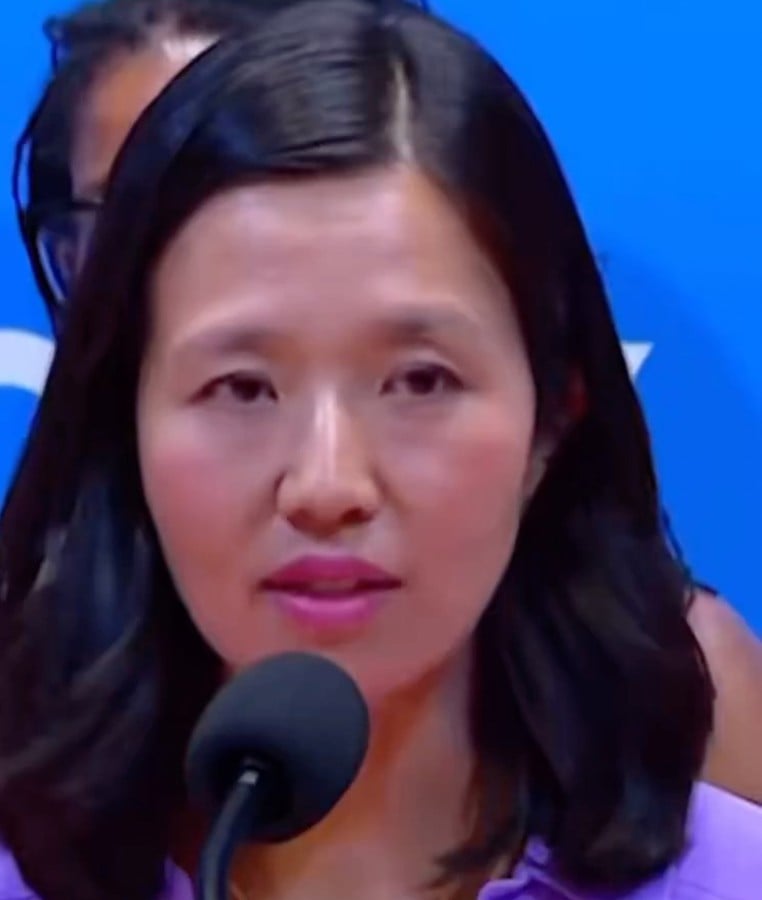
Mayor Wu proposed the largest Boston property-tax hike in nearly 20 years after growing the city budget by roughly $1 billion. File photo
ADVERTISEMENT · Interested in advertising?
ADVERTISEMENT · Interested in advertising?
That is the plan Nick Collins stopped. He is the lawmaker most responsible for killing it, leading the state Senate to bury it 33-5 and sparing homeowners and small businesses across the 1st Suffolk the higher bills the mayor wanted them to pay. He did not fold to City Hall when the pressure came, and the district is better off for it. That independence is precisely why Wu broke with precedent to endorse his challenger — and why Gayle now runs with the backing of the AFSCME city-workers' union and 32BJ SEIU, the same coalition that rubber-stamps the mayor's agenda downtown.

Mayor Michelle Wu endorsed Latoya Gayle on June 3, an unusual move against a sitting senator of her own party. File photo
The 1st Suffolk has already seen what a Wu loyalist delivers once in office. On the Boston City Council, the mayor's allies operate as a reliable rubber stamp — MDN has reported how Wu ally Sharon Durkan killed a vote to screen firefighters for cancer, how the city's planning arm handed budget chair Ben Weber's wife's nonprofit a 10-year lease, and how a Wu-backed councilor skipped 70 percent of the budget oversight meetings she was elected to attend. Gayle would bring that same reflex to Beacon Hill — one more vote the mayor never has to worry about. The 1st Suffolk does not need another Wu rubber stamp.
The choice in this primary is not a complicated one. Collins has answered to the neighborhoods that elected him and proved it when he refused to hand Wu the tax increase she demanded. Gayle is offering the opposite — a reliable vote for the agenda the Senate just rejected, dressed in the language of reform and bankrolled, until weeks ago, by the very interests she was paid to serve.
The Democratic primary is September 1.
Loading Comments