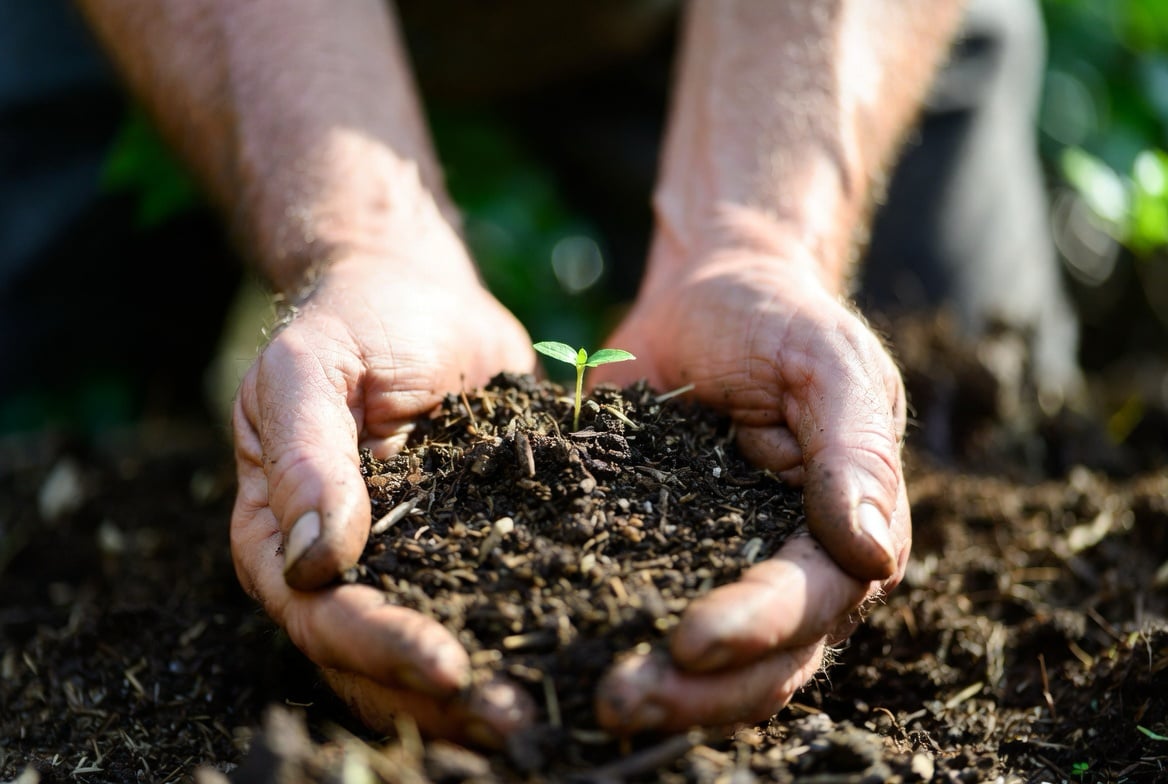
BOSTON — Massachusetts's sprawling economic development bill is billed as a package to drive jobs, industry and growth. Tucked inside it is a plan to let the state compost human beings into soil.
Amendment 273, titled "Expanding after-death care options," would legalize two alternatives to traditional burial and cremation: natural organic reduction — the technical term for human composting, which the amendment defines as "the contained, accelerated conversion of human remains to soil" — and alkaline hydrolysis, a process that uses chemicals, heat and pressure to reduce a body to "inorganic bone fragments and a sterile solution," and which is sometimes marketed as water cremation.
MASSDAILYNEWS
STAY UPDATED
Get Mass Daily News delivered to your inbox
ADVERTISEMENT · Interested in advertising?
ADVERTISEMENT · Interested in advertising?
The measure was offered by Representatives Natalie Higgins of Leominster and Jack Lewis of Framingham, with co-sponsors Lindsay Sabadosa, Carmine Gentile, David LeBoeuf and Kristin Kassner — all Democrats. It is one of nearly 700 amendments piled onto H5562, "An Act relative to economic development in the commonwealth," which the House took up this week. The bill's own emergency preamble says its purpose is to "drive industry innovation and promote economic opportunity and job creation" — not to rewrite how the dead are disposed of.
Rather than a simple sign-off, the amendment would stand up an entirely new state licensing regime. Composting and hydrolysis facilities would need operating licenses from the Division of Occupational Licensure, with regulations written by the Board of Registration in Embalming and Funeral Directing in consultation with the Department of Public Health — covering "operational standards, personnel qualifications, environmental safeguards, and testing for pathogens and toxic materials." Funeral directors, embalmers and crematory operators could add a composting or hydrolysis certification after completing state-approved coursework.
ADVERTISEMENT · Interested in advertising?
ADVERTISEMENT · Interested in advertising?
The amendment carries over the safeguards that already govern cremation — a 48-hour waiting period before a body may be processed, a medical examiner's sign-off, and permanent disposition records — while veterans whose remains go unclaimed would still be sent to a veterans' cemetery.
Human composting is legal in about a dozen states, starting with Washington in 2019, and supporters pitch it as a greener, cheaper alternative to embalming. But in Massachusetts, the question of whether the state should be composting and dissolving human remains isn't getting a debate of its own — it is being settled as amendment No. 273 on a bill about growing the economy.
Loading Comments