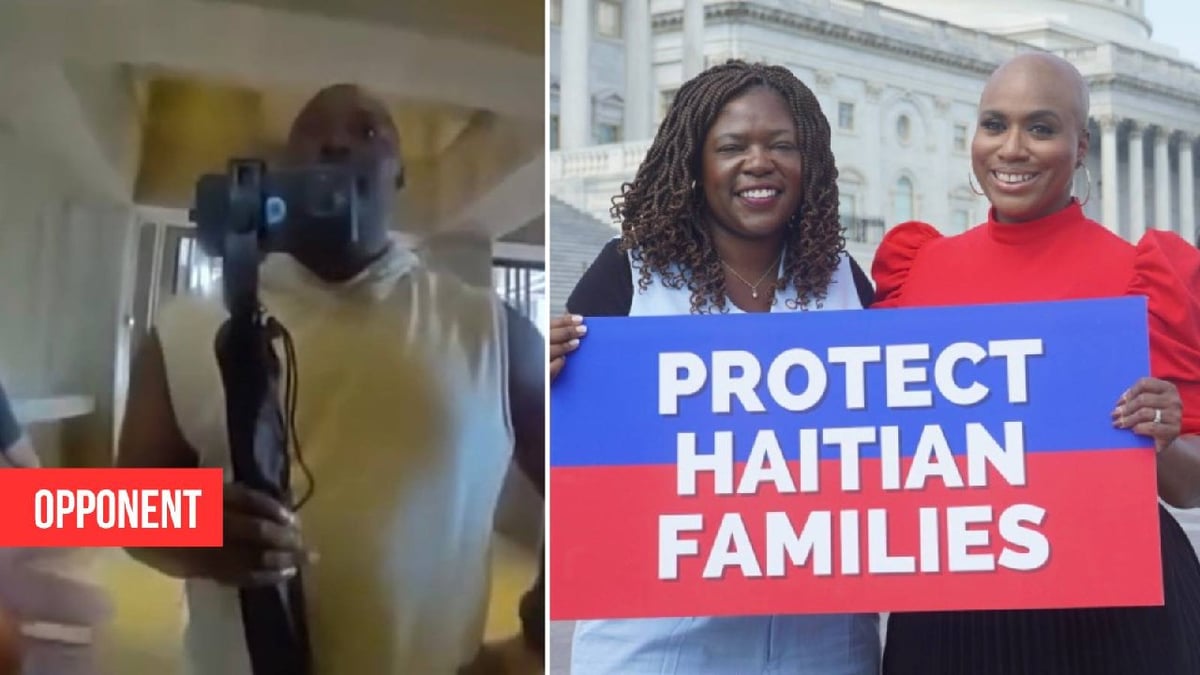
BOSTON — On May 6, 2026, At-Large Boston City Councilor Ruthzee Louijeune — a Pressley loyalist and former council president — had U.S. Rep. Ayanna Pressley's congressional opponent Shawn Nelson thrown out of a public city council budget hearing for recording the meeting. The Boston police officer enforcing the order admitted the reason out loud, on Facebook Live: "Ruthzee wants him out because he was recording."
The line lands at the 8:57 mark of footage Nelson posted to Facebook. Later in the same video, a Boston City Council staffer is heard telling the officer she does not know whether Nelson had been disruptive — undercutting the only legitimate basis the chair would have had to order his removal.
Nelson is a Marine veteran and healthcare worker, and the primary challenger running against Pressley in Massachusetts's 7th Congressional District. Louijeune was endorsed by Pressley in her 2021 City Council race and signed Pressley's policy pledge. The Sept. 1 primary is the same day as the 1st Suffolk State Senate primary.
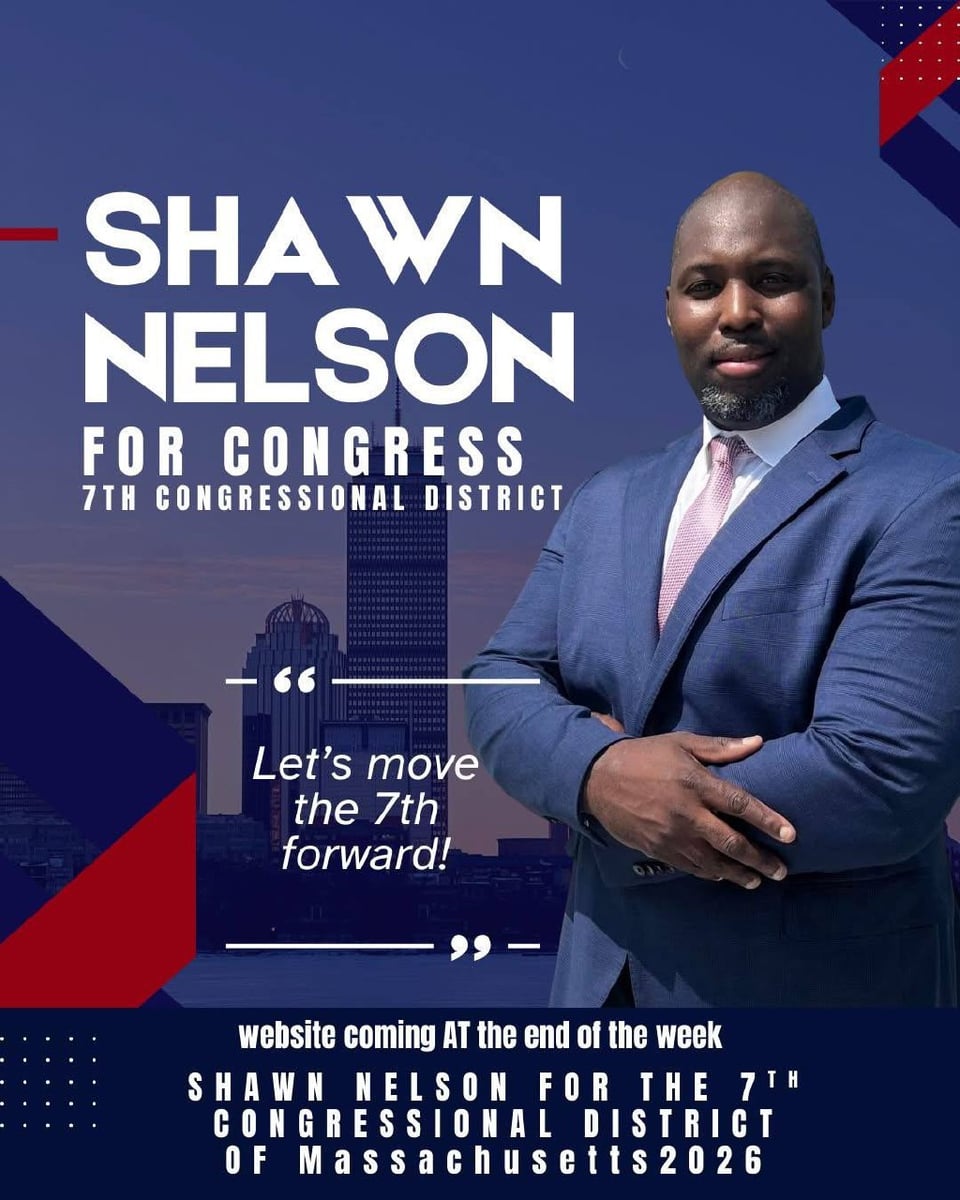
Shawn Nelson is challenging Rep. Ayanna Pressley in the September 1 primary for Massachusetts's 7th Congressional District. Image: Shawn Nelson for Congress.
What the law says
Here is where the story collapses for the people who ordered the removal.
Massachusetts state law — G.L. c. 30A §20(f), the Open Meeting Law — is explicit: "any person may make a video or audio recording of an open session of a public meeting." Notify the chair first. That's the whole rule. The Boston City Council is unambiguously a public body covered by §20(f).
A chair does retain authority to remove someone who is disrupting the meeting — yelling over speakers, blocking sightlines, refusing reasonable time, place, and manner rules. The Attorney General's Open Meeting Law guidance is clear on that. Disruption is the legitimate basis; recording is not.
A removal whose stated reason — said out loud, on tape, by the officer enforcing it — is "because he was recording" is the exact order §20(f) was written to stop. The federal courts add another layer: the 1st U.S. Circuit Court of Appeals established in Glik v. Cunniffe (2011) that the First Amendment also protects recording of government officials in public — layering federal civil-rights exposure on top of the state-law problem.
How it unfolded
According to a formal complaint Nelson filed with the Boston Police about the May 6 incident, a Boston police sergeant was the first officer to approach him as he sat filming the council hearing at about 1:00 p.m. inside Boston City Hall. When Nelson pressed for a reason he wasn't allowed to record, the sergeant cycled through claims:
- He told Nelson recording was prohibited, but couldn't cite any law.
- He claimed Nelson had been trespassed from City Hall — Nelson said this was false.
- He claimed there was an active court order against Nelson — Nelson said this was also false; a court matter the officer appeared to be referencing had been dismissed on March 27, 2026.
MASSDAILYNEWS
STAY UPDATED
Get Mass Daily News delivered to your inbox
ADVERTISEMENT · Interested in advertising?
ADVERTISEMENT · Interested in advertising?
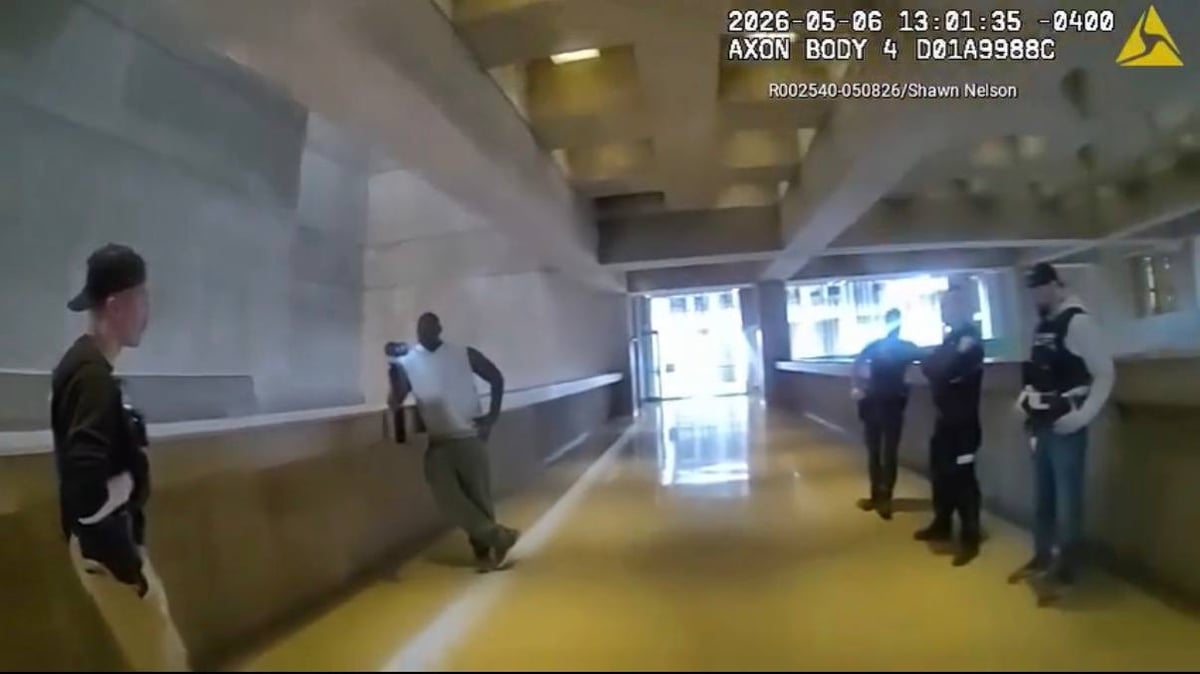
Body-camera footage timestamp 2026-05-06 13:01:35 — multiple Boston Police officers around Shawn Nelson inside Boston City Hall during the May 6 incident. Image: BPD body-camera (AXON BODY 4).
When Nelson kept pressing, the sergeant landed on a fourth explanation: an "unnamed City Councilor" had told him Nelson wasn't permitted to record. The sergeant refused to identify which councilor.
Later in the same encounter, a Boston police officer was caught on Facebook Live filling in the blank: "Ruthzee wants him out because he was recording."
By the end of the encounter, around six Boston police officers had massed inside City Hall for what amounted to one man sitting in a chair with a phone.
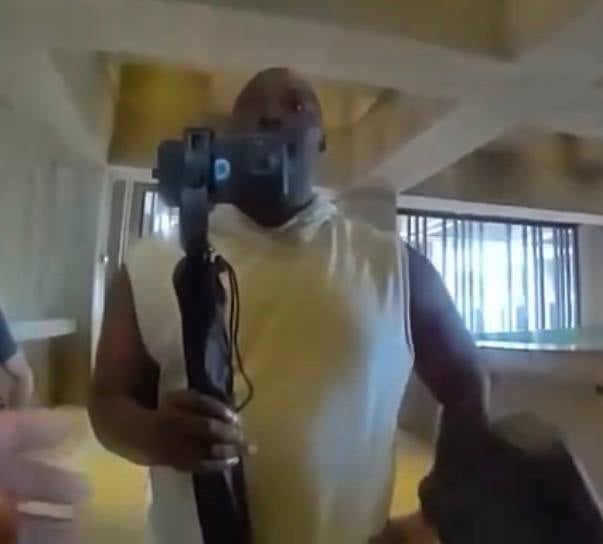
Shawn Nelson with his recording rig during the May 6 incident inside Boston City Hall. Image: BPD body-camera footage.
Nelson is no stranger to Wu's apparatus. In June 2022, he was arrested at one of then-newly-installed Mayor Wu's "coffee hour" events at Dorchester's Ronan Park, charged with disturbing the peace, resisting arrest, and violating a city ordinance after he used a bullhorn to protest the mayor's arrival.
Nelson responds
Nelson posted his own framing to Facebook alongside the footage.
"Boston City Council Ruthzee initiate[d] a situation involving me recording a public City Council meeting by involving Boston Police and claiming I was not allowed to record," he wrote. "Instead of respecting transparency and the public's right to document government proceedings, the focus became stopping the person with the camera rather than protecting the rights of the public."
ADVERTISEMENT · Interested in advertising?
ADVERTISEMENT · Interested in advertising?
On the racial irony: "The same politicians who constantly talk about protecting marginalized communities seem terrified of a Black man holding a camera and exercising his rights. Instead of respecting those rights, they look for any excuse to escalate situations no different than a Karen creating conflict over personal feelings and discomfort."
His kicker: "The real drama isn't coming from the public — it's coming from City Hall itself."
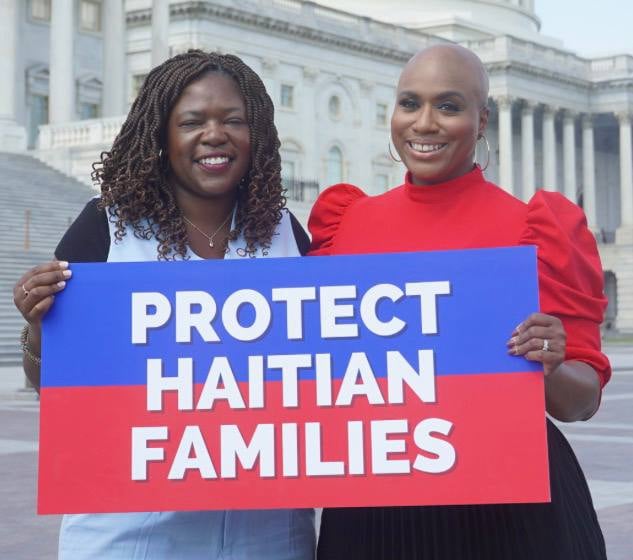
Rep. Ayanna Pressley (right) and At-Large Boston Councilor Ruthzee Louijeune (left) at the U.S. Capitol. Pressley endorsed Louijeune in her 2021 City Council race and Louijeune signed the “Pressley Policy Pledge.” Image: campaign.
The wider pattern
The removal lands during a year of mounting criticism over how the Wu administration handles public-meeting access — from the Blue Hill Avenue redesign, where residents say they were excluded from real consultation, to the City Council's handling of Mayor Wu's $4.9 billion FY27 budget, during which eight people were arrested at a chamber disruption on June 10.
What the Nelson footage exposes isn't just one councilor's overreach. It's a Boston City Council that has built a culture in which officers feel comfortable making up reasons to silence residents, in which "an unnamed councilor" can be cited as binding authority, and in which the council's own staff cannot say whether disruption justified a removal.
Louijeune — a frequent Wu surrogate on the body — is now at the center of a question her own meeting's footage just answered for her: whether the council is willing to be recorded by the public it serves.
The answer, on Facebook Live, was no.
This is a developing story.
Loading Comments