
BOSTON — Ten months ago, Mass Daily News first reported that Wu's housing policies — which deprioritized English-speaking neighborhoods and set racial targets for homebuyer assistance — may violate federal discrimination laws. And the evidence wasn't hard to find — the city published most of it on its own website. Now the federal government has made it official.
The Daily Caller first reported the complaint on Friday. Mass Daily News has independently reviewed the full 71-page complaint and its exhibits.
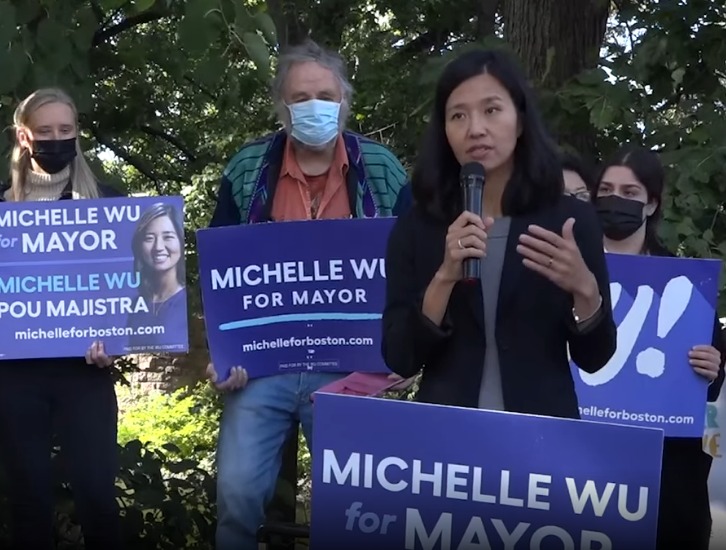
Mayor Michelle Wu — named personally in a federal housing discrimination complaint filed by HUD. Photo: Boston University News Service / CC BY 3.0.
On April 30, the U.S. Department of Housing and Urban Development filed a formal Secretary-Initiated Complaint accusing Boston of systematically sorting residents by race when deciding who gets housing help — and using federal money to do it. The complaint names Mayor Michelle Wu personally, along with her Chief of Housing Sheila Dillon, Chief of Planning Kairos Shen, the Mayor's Office of Economic Opportunity and Inclusion, and the nonprofit Opportunity Communities.
This isn't a press release or a political statement. It's a legal filing, signed under penalty of perjury by Craig W. Trainor, the Assistant Secretary for Fair Housing at HUD. It cites nine exhibits. Every single one is a document the city wrote and published itself.
How we got here
In July 2025, Mass Daily News reported that Wu's housing plan treated whiter, English-speaking neighborhoods as lower priority for investment — and set explicit racial targets for who gets homebuyer assistance. The report went viral — and caught the attention of people in a position to do something about it.
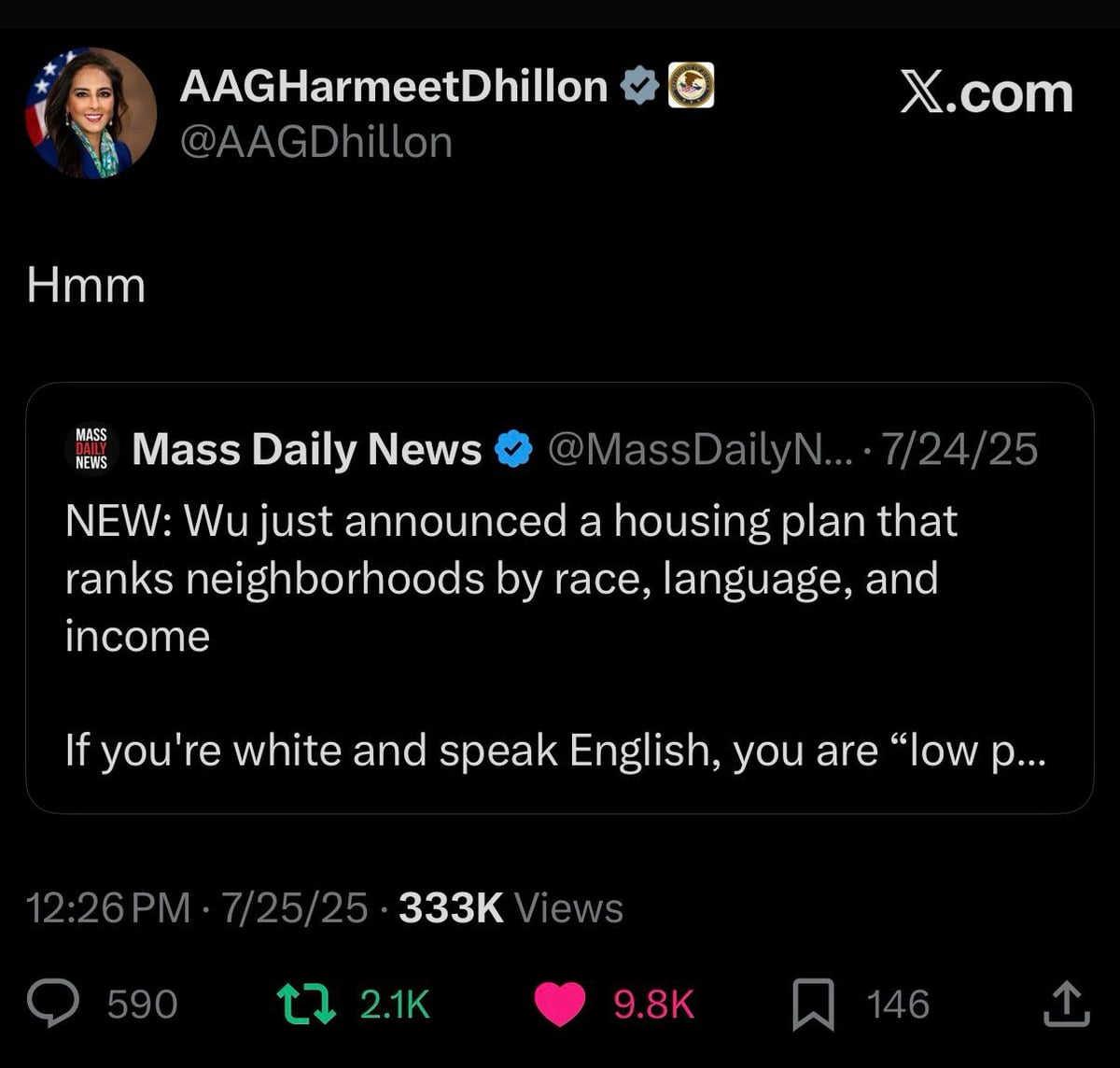
The Mass Daily News report caught the attention of federal officials — including Harmeet Dhillon, the Trump-appointed Assistant Attorney General for Civil Rights, who quote-tweeted it to 333,000 viewers.
That changed in December. HUD opened a formal civil rights investigation and gave Wu's team 10 days to respond. Wu didn't engage with the substance. Instead, she posted on BlueSky, called the probe "baseless," and blamed the Trump administration for political overreach. She did not dispute the 65% quota. She did not deny that race was baked into the housing plan. She changed the subject. It didn't work.
Five months later, on April 30, HUD filed the complaint — using the city's own paperwork as the evidence.
What the complaint says
The filing reads like a greatest hits of race-based policymaking, all documented in the city's own publications.
The 65% quota. Wu's administration set an explicit target that "at least 65%" of homebuyer assistance go to "BIPOC" households. The city's Housing Strategy 2025 says resources will help "low-to-moderate-income and/or BIPOC residents" — that "and/or" is doing a lot of heavy lifting. It means race alone can qualify someone, regardless of income. The administration didn't hide this. They tracked it as a budget KPI, presented it to the city council, and celebrated hitting the target in a press release.
MASSDAILYNEWS
STAY UPDATED
Get Mass Daily News delivered to your inbox
ADVERTISEMENT · Interested in advertising?
ADVERTISEMENT · Interested in advertising?
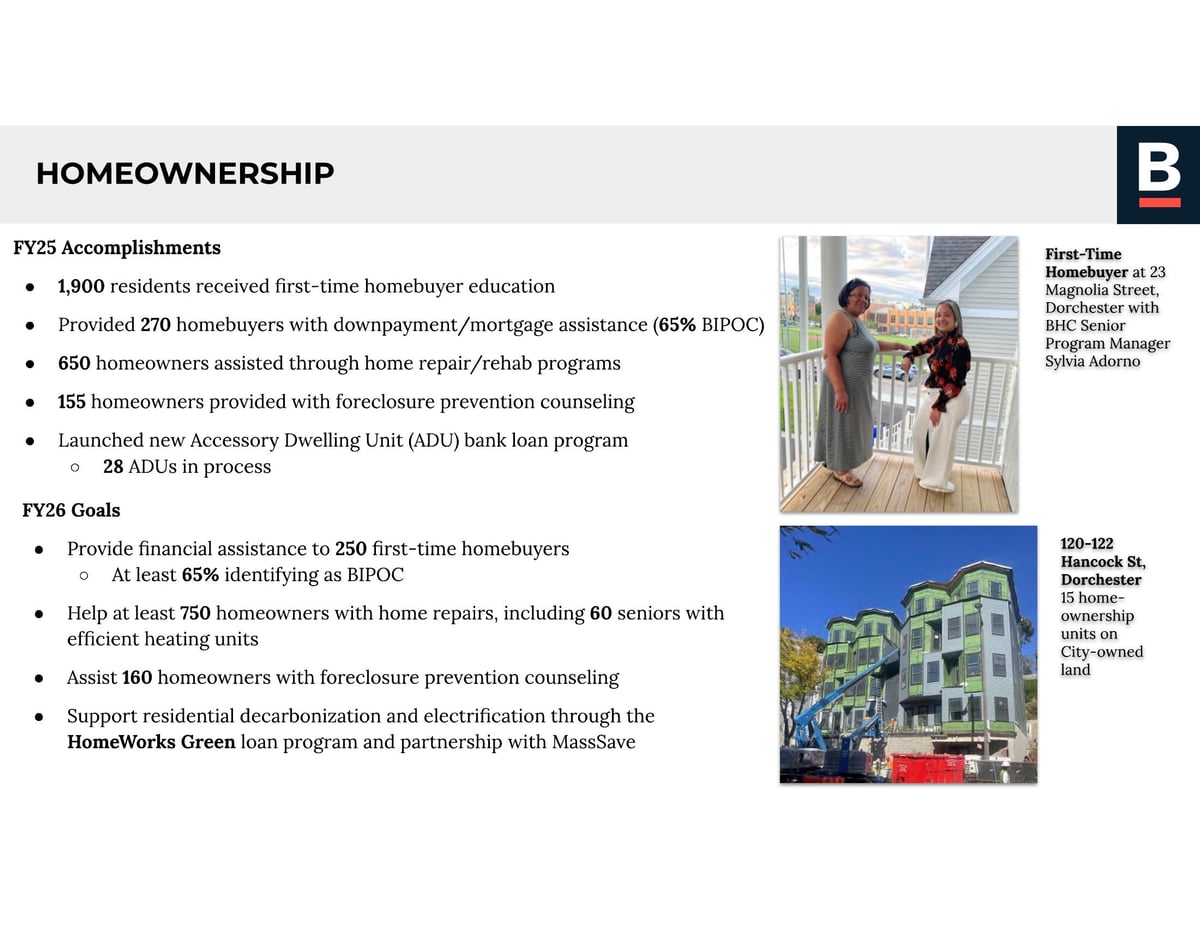
The city's FY26 housing budget slide presented to the City Council — showing "65% BIPOC" as both an accomplishment and a goal. This slide was cited by HUD as evidence of racial quotas.
The Christmas party. HUD cited this as evidence of "racial animus" — proof that the administration's race-based approach wasn't limited to housing policy but extended to how the mayor's office treated people in its own building. In December 2023, Wu's office sent invitations to an "Electeds of Color Holiday Party" — a city council event that excluded white members. The invitations were accidentally sent to all 13 councillors, including the seven white ones. Wu's aide Denise DosSantos rescinded the invitations to the white councillors within 15 minutes, then sent a follow-up clarifying the event was restricted to non-white councillors. The "accident" wasn't the party. It was accidentally inviting the white people.
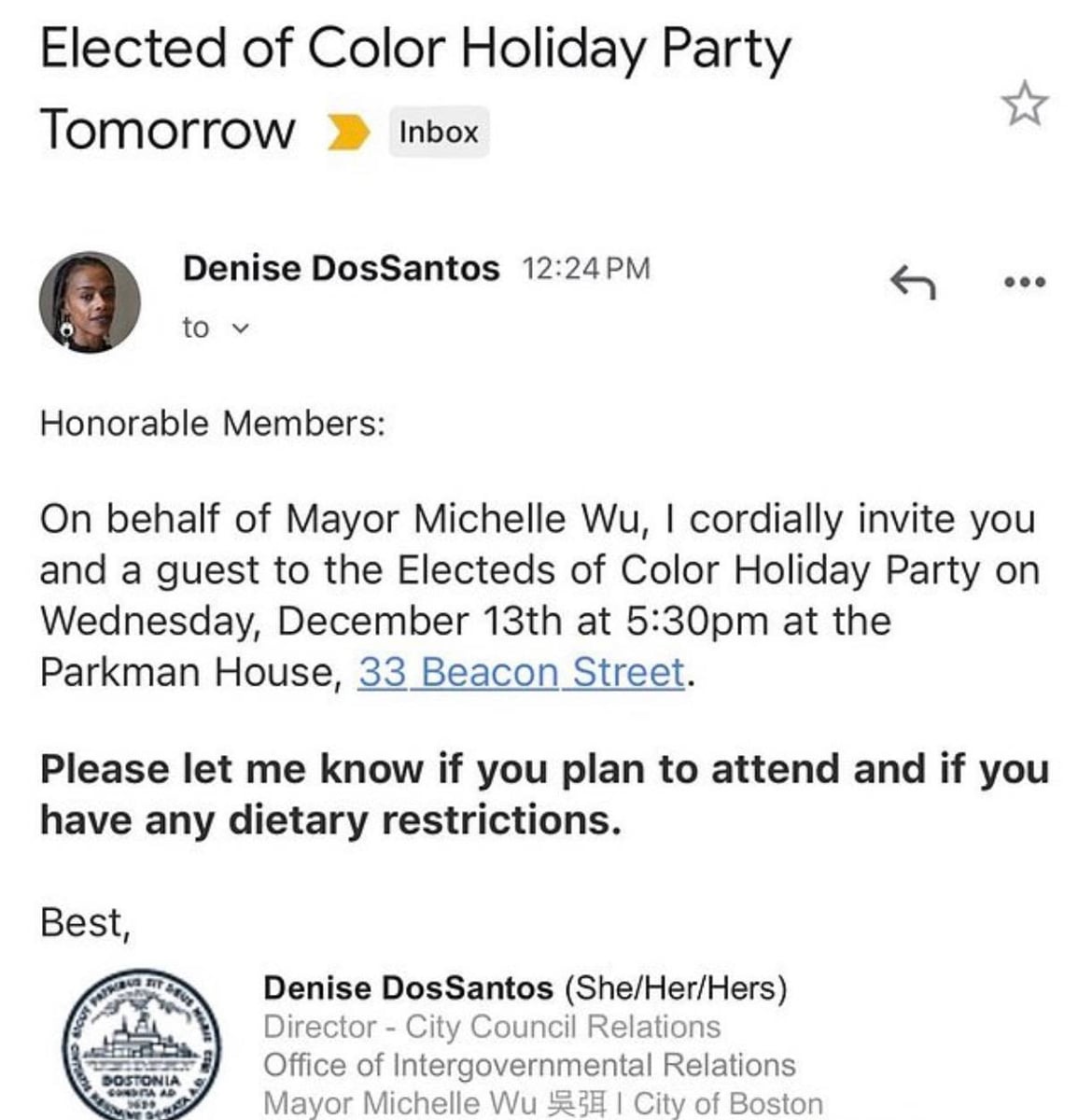
The email invitation from Wu's aide Denise DosSantos inviting councillors to the "Electeds of Color Holiday Party" — the event that excluded white members. HUD cited this as evidence of "racial animus."
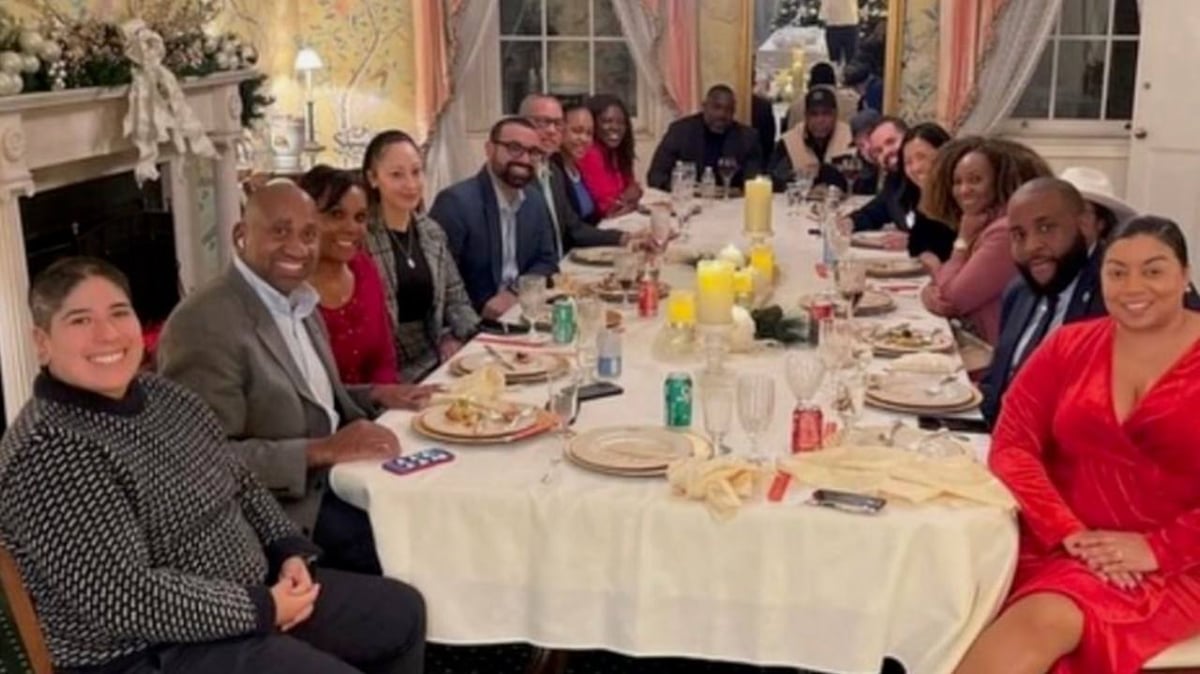
The "Electeds of Color Holiday Party" hosted by Wu's office in December 2023 — the event that excluded white city councillors. HUD cited it as evidence of racial animus. Photo via @wutrain on Instagram.
Deprioritizing English-speaking neighborhoods. The city's Anti-Displacement Action Plan uses a race-based risk assessment tool that steers public resources away from areas with higher percentages of "native English speaking residents" — in plain terms, whiter neighborhoods get less housing investment.

Boston row houses. HUD alleges the city deprioritized whiter, English-speaking neighborhoods for housing investment. Photo: Wikimedia Commons.
Pressuring banks to lend by race. Through the Boston Home Center, the city set out to "induce banks and mortgage lenders to increase their lending in communities based on the racial demographics of the area." Not income demographics. Racial demographics.
Race-conscious buyer selection. The nonprofit Opportunity Communities, working alongside the city, listed a program on its website for "explicit race-conscious marketing and buyer selection." The webpage has since been deleted. HUD found it anyway.
Racial terms for developers. Any developer seeking to build on city-owned land must submit a "Diversity and Inclusion Plan" detailing participation by people of color — including among future building tenants. The city intends to bring this racial composition standard "into private development." They put that in writing too.
ADVERTISEMENT · Interested in advertising?
ADVERTISEMENT · Interested in advertising?
They built their own evidence file
What makes this complaint unusual is that HUD didn't need to dig. The 65% quota appeared in the Boston Housing Strategy 2025, the FY26 budget presentation to the city council, a Welcome Home Boston press release, and the City of Boston Assessment of Fair Housing signed by Wu herself. Every document is a city publication. Every quote is from a city official. The federal government didn't need a whistleblower — it had boston.gov. The city did the investigation for them.
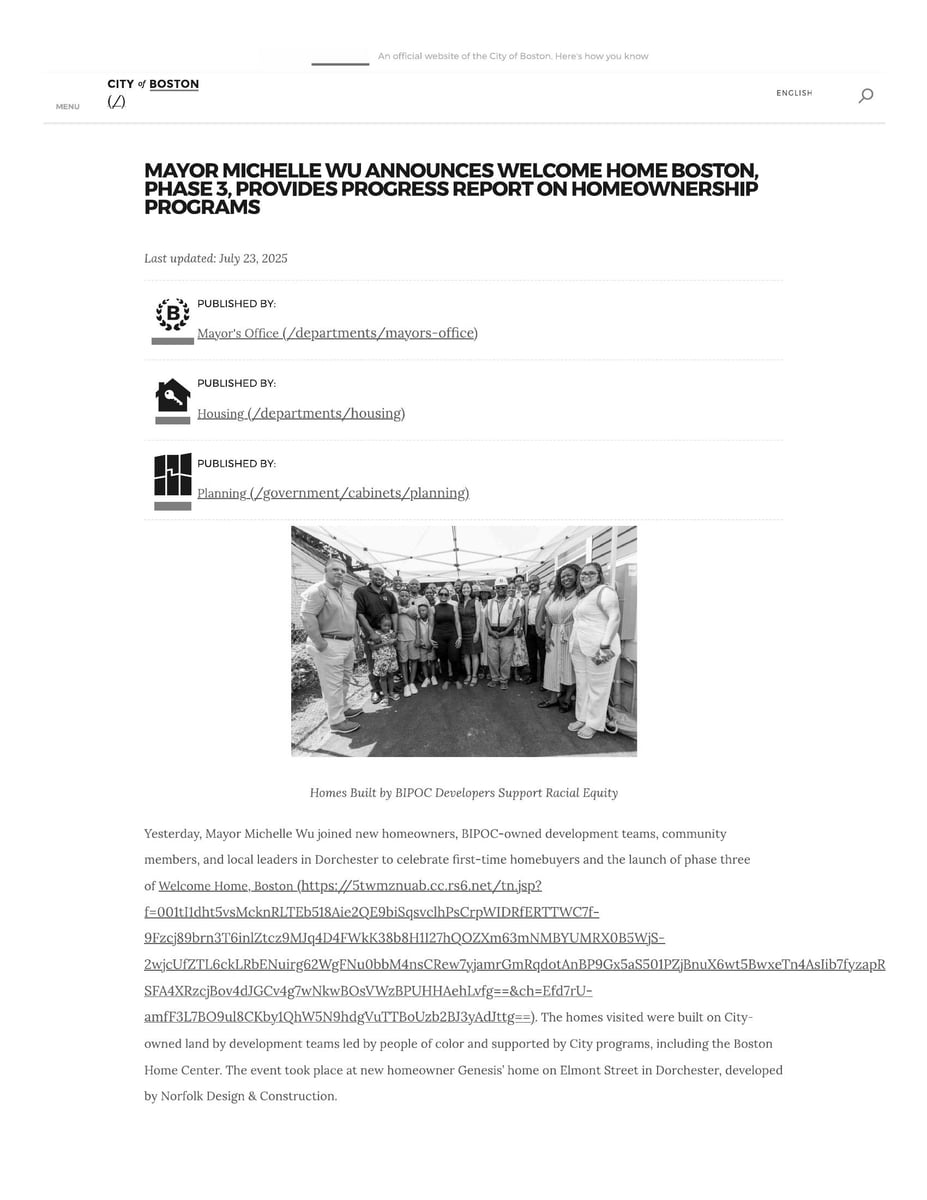
The city's own Welcome Home Boston press release — published on boston.gov — celebrating that "more than 65% of homebuyers assisted through City of Boston initiatives are BIPOC." HUD cited this document as evidence.
What happens next
HUD investigated in December. Wu responded. HUD wasn't satisfied. Now there's a formal complaint on file.
The city can try to settle. If it doesn't, the case goes before a federal judge.
If HUD wins, Boston could lose millions in federal housing funding and be forced to scrap its race-based programs. Wu, Dillon, and Shen are named personally — meaning they face individual liability, not just the city.
The complaint was signed April 30, 2026. The most recent act of discrimination cited: March 5, 2026 — less than two months ago.
The case is ongoing.
Loading Comments