BOSTON — The Supreme Court ruled 6-3 on Tuesday that states cannot draw voting districts based on the race of the people who live there — a landmark decision that upends decades of redistricting practice and has Massachusetts officials sounding the alarm.
The ruling struck down Louisiana's congressional maps, which had been redrawn in 2024 to create an additional majority-minority district — a district where most residents are people of color. Justice Samuel Alito, writing for the majority, said the maps violated the Constitution's equal protection clause, arguing that "vast social change" in voting patterns across the country has eliminated the need for race-based district drawing.
In plain English: the court said sorting voters into districts by skin color, even with good intentions, is unconstitutional.
What this means
For decades, states have drawn district lines to ensure racial minorities have a fair shot at electing candidates who represent them. The Voting Rights Act, passed in 1965, was the backbone of that effort.
The Supreme Court didn't throw out the Voting Rights Act entirely. But it did change the rules. Going forward, challenges to voting maps will have to prove that the maps were drawn with the intent to discriminate — not just that they had a discriminatory effect. That's a much harder legal standard to meet.
Justice Elena Kagan, dissenting, warned the decision "will set back the foundational right Congress granted of racial equality in electoral opportunity."
Massachusetts drew 39 districts by race
This isn't abstract for Massachusetts. In 2021, state lawmakers redrew the map to create 39 majority-minority legislative districts — districts where most constituents are people of color. The stated goal was to give candidates of color a better shot at winning seats in the Legislature. House Majority Leader Mike Moran said at the time the maps were a "reflection" of the state's increasing diversity.
In Boston, the city council approved a new map in 2022 that reshuffled thousands of voters across districts. Proponents said it would amplify the political power of communities of color. Critics noted it carved up some white neighborhoods to do it.
Here's the part nobody talks about: roughly half of those 39 majority-minority districts are still represented by white lawmakers — many of them incumbents who held the seats before the maps were redrawn. The maps changed. The representation, in many cases, didn't.
MASSDAILYNEWS
STAY UPDATED
Get Mass Daily News delivered to your inbox
ADVERTISEMENT · Interested in advertising?
ADVERTISEMENT · Interested in advertising?
The Supreme Court's ruling now raises the question of whether those maps — drawn explicitly around racial demographics — could face legal challenges of their own.
Massachusetts officials react
Massachusetts Democrats condemned the ruling within hours.
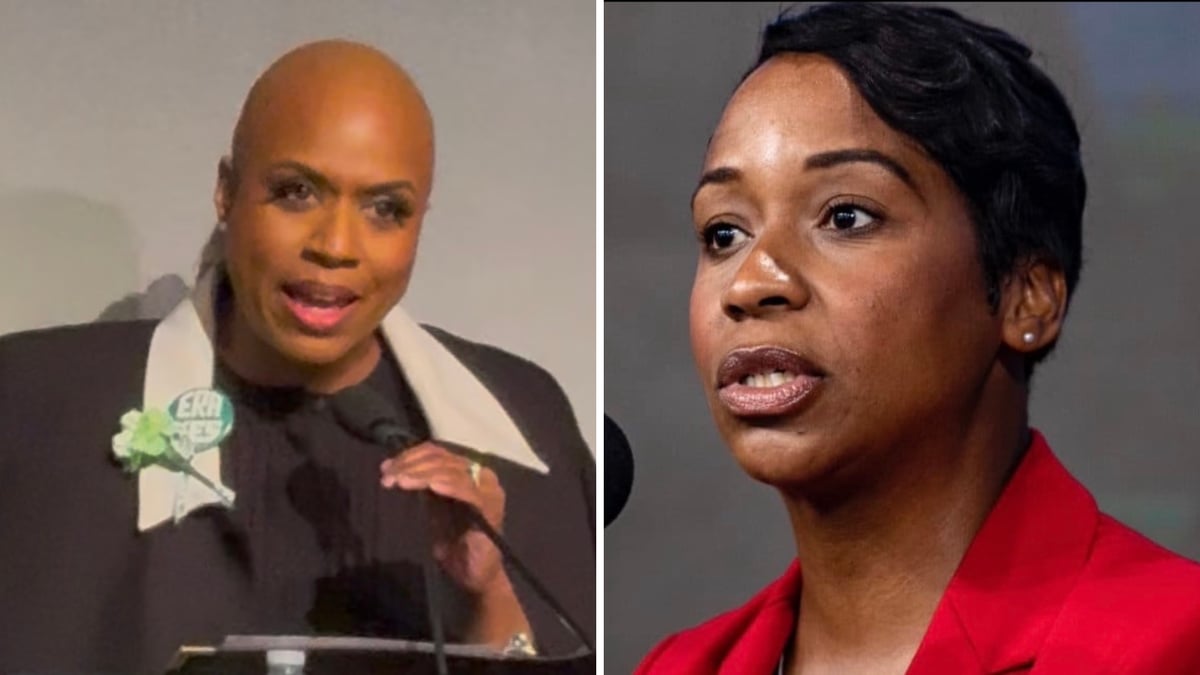
Ayanna Pressley, Massachusetts' sole US representative of color, called the ruling "shameful" and an assault on "Black political power," telling the Globe it "will disenfranchise millions of people."
Attorney General Andrea Campbell, who had submitted an amicus brief supporting Louisiana's maps, said the decision "will diminish the ability of communities of color to elect candidates of their choice at every level of government."
Secretary of State William Galvin was more direct: "It's certainly going to make it harder to defend minority communities."
Reactions from around the country
National Democrats piled on.
ADVERTISEMENT · Interested in advertising?
ADVERTISEMENT · Interested in advertising?
— Barack Obama (@BarackObama) April 29, 2026Today’s Supreme Court decision effectively guts a key pillar of the Voting Rights Act, freeing state legislatures to gerrymander legislative districts to systematically dilute and weaken the voting power of racial minorities - so long as they do it under the guise of…
— Stacey Abrams (@staceyabrams) April 29, 2026Today’s cruel ruling on Louisiana v. Callais guts what was left of the Voting Rights Act and sets us farther on the path to authoritarianism — aided and abetted by the Supreme Court.
— Gavin Newsom (@GavinNewsom) April 29, 2026The same day MAGA gutted the Voting Rights Act, Trump’s pipsqueak DeSantis rushed through rigged maps.
No debate. No public input.
They’re scared of VOTERS.
This November: FAFO.
Today’s Supreme Court decision in Louisiana vs. Callais is a direct attack on Black voters and marks a shameful moment in our democracy. This ruling opens the door to racial gerrymandering that will take us back to Jim Crow. This ruling is a betrayal of Black voters and the… pic.twitter.com/EO2acn8YVn— NAACP (@NAACP) April 29, 2026
What happens next
Massachusetts' one majority-minority congressional district — the Seventh, represented by Pressley — is unlikely to be redrawn before the next census. Experts say the state's maps probably won't face immediate challenges.
But the 2030 census is coming, and with it, a new redistricting cycle. Advocacy groups say the court's decision will make it harder to draw maps that prioritize racial representation — and easier for opponents to challenge maps that do.
The ruling doesn't end the debate about fair representation. It changes the terms. Drawing districts to reflect communities of interest — geography, economics, shared concerns — remains legal. Drawing them by race, the court now says, does not.
Loading Comments