BOSTON — Construction in Boston has plunged to its lowest level in recent memory, and the pipeline of developer payments that funds the city's affordable housing programs is drying up.
In 2022, at the peak of a lab and commercial building boom, developers filed applications for projects that owed the city an estimated $61.4 million in linkage payments — fees that go directly into the Neighborhood Housing Trust, Boston's fund for subsidized housing development.
By 2024, that number had dropped to $3.6 million. In 2025, it fell to $2.1 million.
That's a 97% collapse in three years.
Cash hitting the city's housing trust hasn't fallen yet — Boston still collected around $17 million in 2024 and roughly $16 million in 2025 from older commitments paying out on multi-year schedules. But those receipts are coming from filings made years ago. The pipeline of new commitments — the money that will fund housing in 2027, 2028, and 2030 — has cratered.
What Wu inherited — and what she did with it
Under former Mayor Marty Walsh, Boston became one of the hottest development markets in the country. Walsh courted developers, streamlined permitting, and presided over a surge in lab, office, and residential construction that sent linkage payments soaring. By the time he left for Washington in March 2021, the pipeline was full.
Wu took office that November and took a different approach. In late 2023, her administration won approval to raise the inclusionary development requirement from 13% to 20% — a 54% increase in the affordable housing obligation on every new market-rate project — and to double linkage fees for lab developers. In January 2025, the Boston Zoning Commission adopted Net Zero Carbon Zoning, requiring projects filed after July 2025 to meet net-zero emissions standards.
Rather than course-correcting, Wu is doubling down. Her 2030 Climate Action Plan, released this week, layers more mandates onto a market that has already stopped building.
As Mass Daily News reported in February, four years into Wu's tenure, Boston rents are nearly double the national median. The construction decline began as early as 2024, when housing permits fell to their lowest level since 2011.
MASSDAILYNEWS
STAY UPDATED
Get Mass Daily News delivered to your inbox
ADVERTISEMENT · Interested in advertising?
ADVERTISEMENT · Interested in advertising?
Statewide, Massachusetts construction grew just 0.6 percent between Q1 2020 and Q3 2025 — compared to 7.2 percent nationally, per a Pioneer Institute report this month. "Massachusetts' dramatic decline in business formation strongly suggests that investors and entrepreneurs are choosing not to build here," Pioneer Institute executive director Jim Stergios said. Boston is the epicenter.

Housing construction in East Boston. The city's building rate has fallen to its lowest level in decades. Photo: NewtonCourt / Wikimedia Commons / CC BY-SA 4.0.
How the money works
Boston relies on two key policies to extract housing money from developers. The inclusionary development policy (IDP) requires builders of market-rate housing to set aside 20% of units at affordable rents — or pay the city an equivalent sum. The linkage policy requires commercial developers to pay a fixed fee based on project size. A 200,000-square-foot lab building, for instance, owes the city about $4.6 million.
Together, these two policies account for roughly one-third of the city's $95 million housing budget in fiscal year 2026, and about 42% in fiscal year 2027.

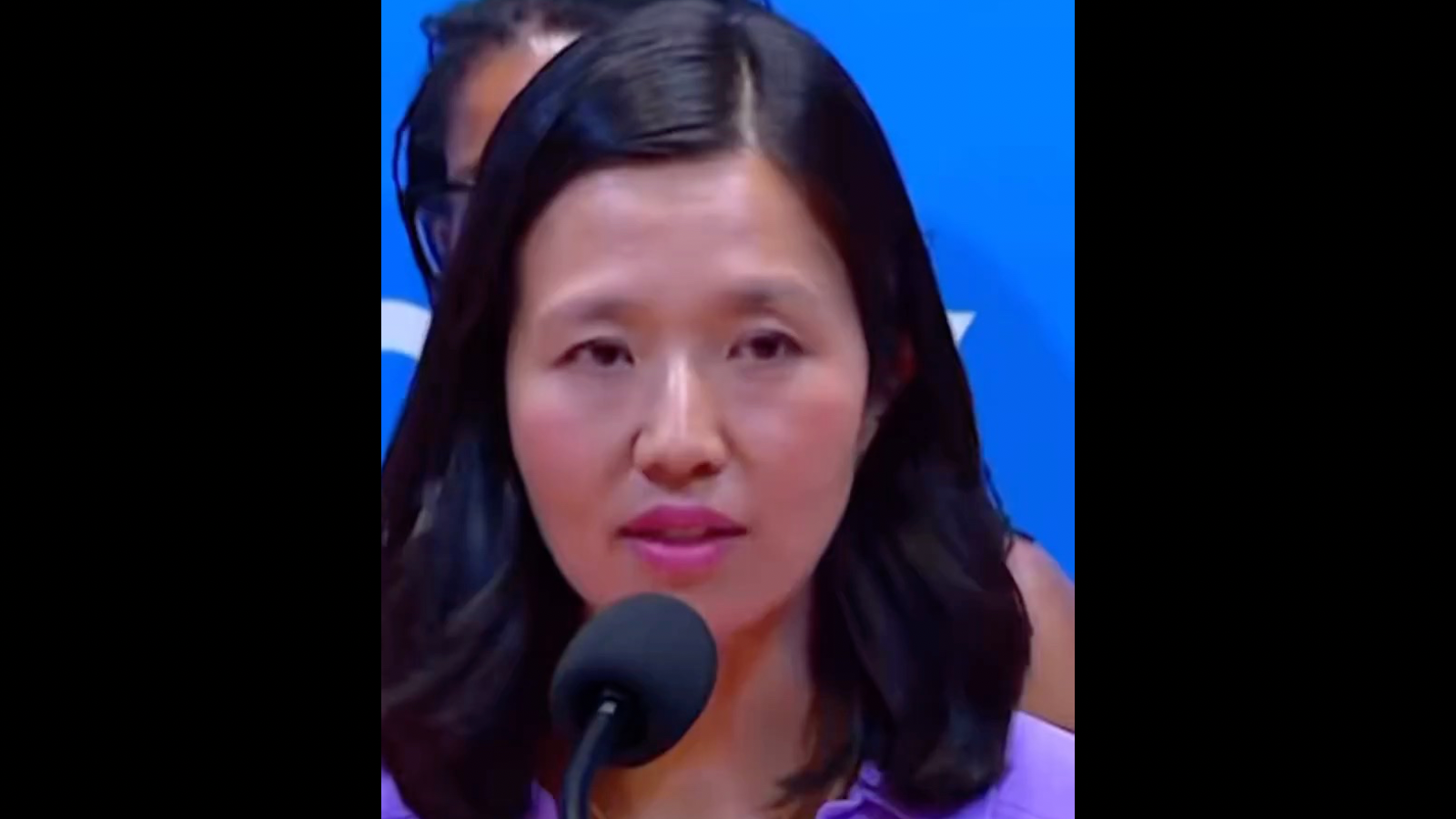
Mayor Michelle Wu raised developer fees in 2023 to fund housing programs. Construction has since collapsed. Photo: Joshua Qualls / Massachusetts Governor's Office.
The COVID money is gone too
The timing is worse than the numbers suggest. Wu allocated $91 million in one-time American Rescue Plan Act funding to subsidized housing development — federal COVID relief that helped fuel what city housing chief Sheila Dillon called "a wonderful couple of years."
ADVERTISEMENT · Interested in advertising?
ADVERTISEMENT · Interested in advertising?
Between 2021 and 2023, the city permitted 3,488 new income-restricted units, the most in any three-year period since at least the late 1990s. But that surge was bankrolled by a federal windfall that won't repeat.
$835,000 per unit — and rising
Even when money is available, the cost of building subsidized housing in Boston has become staggering. The West End library project — a midrise tower with a new branch library on the first two floors and 119 affordable apartments above — was projected to cost more than $835,000 per unit when it was first proposed in 2023, before counting the library itself. Costs have since gone up.
Developers are restructuring projects to escape the affordability mandates that no longer pencil. In Dorchester, Samuels & Associates redrew the two-building second phase of its DOT Block project after the original mixed plan became unfinanceable.
The long-term damage
A major project takes three to five years from permitting to completion. The buildings that won't exist in 2030 — along with the linkage payments and housing units they would have funded — are already decided.
Wu's policies aren't just slowing construction. They're reshaping the economics of building in Boston for a generation. The funding model depends on developers showing up at exactly the moment the city has made showing up more expensive. The federal COVID windfall papered over the contradiction for a few years. That's gone.
From the city's housing chief, looking back at the boom years linkage will no longer fund: "a wonderful couple of years."
Loading Comments