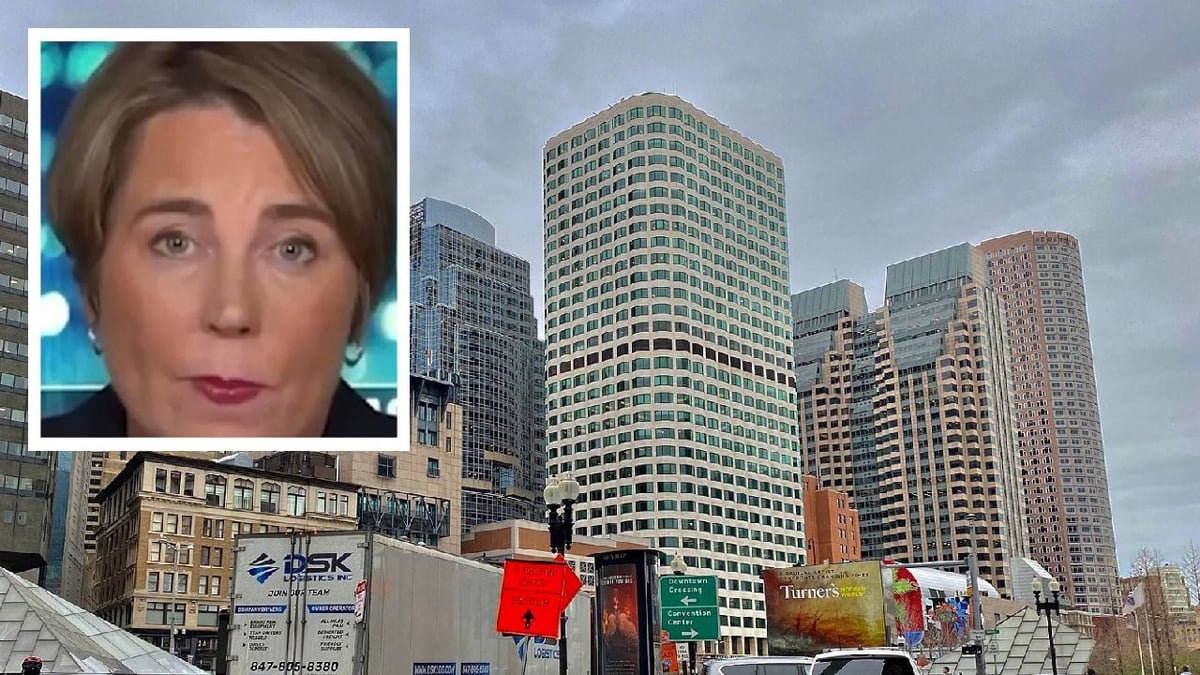
BOSTON — Maura Healey's Massachusetts keeps bleeding jobs and taxpayers, and nobody on Beacon Hill seems particularly interested in stopping the bleeding.
More than 180,000 net domestic residents have packed up and left the state since April 2020. The state has roughly 35,000 fewer private sector jobs than it did in January 2020. And it remains one of just six states in the country that have not bothered to claw back to pre-pandemic employment levels.
The numbers, drawn from a Pioneer Institute analysis of federal data, paint a picture of a state hemorrhaging the people and businesses it needs to sustain itself — and a governor who, in her own words, would "like to see the numbers."
The numbers are in. They have been for a while.
The U-Haul economy
The outflow isn't random. Massachusetts residents are moving primarily to Florida, Texas, North Carolina, and other states where the rent is cheaper, the taxes are lower, and the jobs actually exist.
A 2024 survey found that job availability was one of the top two factors people between the ages of 20 and 30 were weighing when deciding whether to stay in Massachusetts or leave. In a state where housing costs rank among the highest in the nation, a weak job market removes the last reason to stick around. The young leave. The earners follow. The U-Hauls roll south.

More than 180,000 residents have left Massachusetts since April 2020 — a population the size of Cambridge and a half. Photo: HireAHelper / Wikimedia Commons / CC BY 2.0.
MASSDAILYNEWS
STAY UPDATED
Get Mass Daily News delivered to your inbox
ADVERTISEMENT · Interested in advertising?
ADVERTISEMENT · Interested in advertising?
The broader Pioneer report found that Massachusetts has fallen to dead last in the nation for net business formation. The jobs pipeline that would retain young workers is drying up at exactly the moment the workers are leaving. New businesses have historically been the primary driver of job creation. When businesses stop forming, jobs stop appearing. It is not complicated.
What Beacon Hill has done about it

Governor Maura Healey. Asked about outmigration in June 2025, she said she wanted "to see what's happening in terms of any potential outmigration." Photo: Office of the Governor.
The 4% surtax on income above $1 million — the so-called "millionaires tax" — took effect on Healey's first day in office in January 2023. In its first full year, IRS data shows Massachusetts lost a net $4.2 billion in adjusted gross income to other states, up from $3.9 billion the year before. Roughly 16,500 households simply moved their tax address out of state. The millionaires tax did exactly what its critics said it would do: it created millionaires somewhere else.
The Tax Foundation now ranks Massachusetts 41st on its 2025 State Tax Competitiveness Index, down from 34th before the surtax took effect.
State spending, meanwhile, has been on a tear. Healey signed a $56.2 billion budget for fiscal 2024. Then a $57.78 billion budget for fiscal 2025. Then a $60.9 billion budget for fiscal 2026 — roughly 8.4% growth in two years, in a state that just lost the population of Cambridge and a half.
The Emergency Assistance shelter program for migrants alone has cost nearly $1 billion a year, with a two-year tab approaching $2 billion.
ADVERTISEMENT · Interested in advertising?
ADVERTISEMENT · Interested in advertising?
Massachusetts also has the third-highest residential electricity rates in the country, behind only Hawaii and California. The commercial rate is roughly 45% above the national average — a direct hit to the small businesses Pioneer says are no longer forming.
Healey's defenders will point to the $1 billion tax relief package she signed in October 2023, the first state tax cut in more than two decades. It doubled the estate tax exemption from $1 million to $2 million and dropped the short-term capital gains rate from 12% to 8.5%. Worthwhile changes. They have not stopped the moving vans.
The self-reinforcing spiral
Young workers leave because there aren't enough jobs. Businesses leave because they can't find workers — or because the cost of operating in Massachusetts has become prohibitive. Fewer businesses mean fewer jobs. Fewer jobs mean more departures. The cycle feeds itself.

Boston's Financial District. Massachusetts entered 2020 with one of the country's most innovative economies. Five years later, it is one of just six states that still hasn't recovered to pre-pandemic employment. Photo: Wikimedia Commons.
"Massachusetts entered the pandemic as one of the country's most innovative economies," wrote Aidan Enright, the report's author. "That momentum proved to be fragile."
The people who left already knew that. The question is whether Healey and Beacon Hill have figured it out yet.
Loading Comments