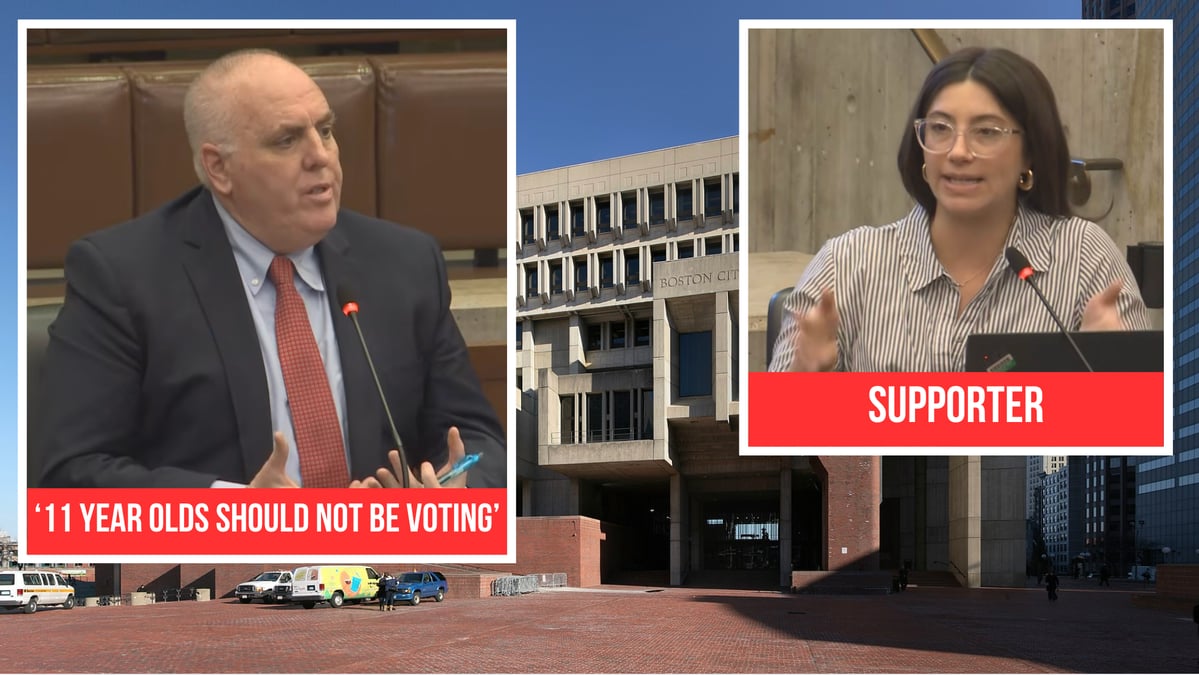
BOSTON — The city is $48 million in the red. Homeowners are eating double-digit property tax hikes two years running. And at a budget hearing Thursday, Democrat Councilor Ed Flynn got Boston's own participatory-budgeting director to confirm, on camera, that 11-year-olds are still voting on how $2.2 million of taxpayer money gets spent. Non-citizens — including illegal immigrants — are eligible too, under the city's own published rule.
'Wholly inappropriate'
"I know one of my colleagues brought up the age of participatory budget residents that are able to vote. Is that accurate?" Flynn asked the program's leadership. "Are youth, age 11-year-old, able to vote on this budget?"
The Office of Participatory Budgeting did not equivocate. The age range, director Renato Castelo explained, had been set by the program's external oversight board "looking at what other municipalities are doing." The city even slices its voters into age brackets for internal analysis — "eleven through nineteen is one of those brackets."
Flynn pressed the point. "They're voting on where taxpayer money should be spent. Is that accurate to say?"
"Yeah, that's correct."
An eleven-year-old, in other words, is a line item.
Flynn was not impressed. "I don't want to be disagreeable, but I do disagree with that — 11-year-old," he told the hearing. "What is that age? Grade 5 or grade 6, maybe. I don't think they should be voting on millions of dollars of taxpay money, especially when raising property taxes double-digit two years in a row."
The tax-hike claim is not rhetorical. Boston homeowners have absorbed back-to-back double-digit tax-bill hikes since Wu took office, even as the administration has grown the city budget by roughly $1 billion. "It's not our money," Flynn said. "It's not the city of Boston's money. It's taxpay money. Taxpayers work hard, they play by the rules, and they do want us to come to City Hall to be fiscally responsible."
MASSDAILYNEWS
STAY UPDATED
Get Mass Daily News delivered to your inbox
ADVERTISEMENT · Interested in advertising?
ADVERTISEMENT · Interested in advertising?
It was not Flynn's first swing at the program. At a prior oversight hearing he called the process "tone-deaf, unserious, and wholly inappropriate" and proposed cutting the $2 million allocation to a symbolic $100,000 or $200,000 until the fiscal picture improves. Councilors Erin Murphy and John FitzGerald have raised flags too. Paul Craney of the Massachusetts Fiscal Alliance put the critique less diplomatically, saying Wu's "decision-making is becoming as juvenile as this latest stunt."
Coletta's 'misinformation' moment
Minutes after the director's confirmation, District 1 Councilor Gabriela "Gigi" Coletta Zapata — a reliable Wu vote who rarely strays from the administration's line — rose to carry the mayor's water and set critics straight.
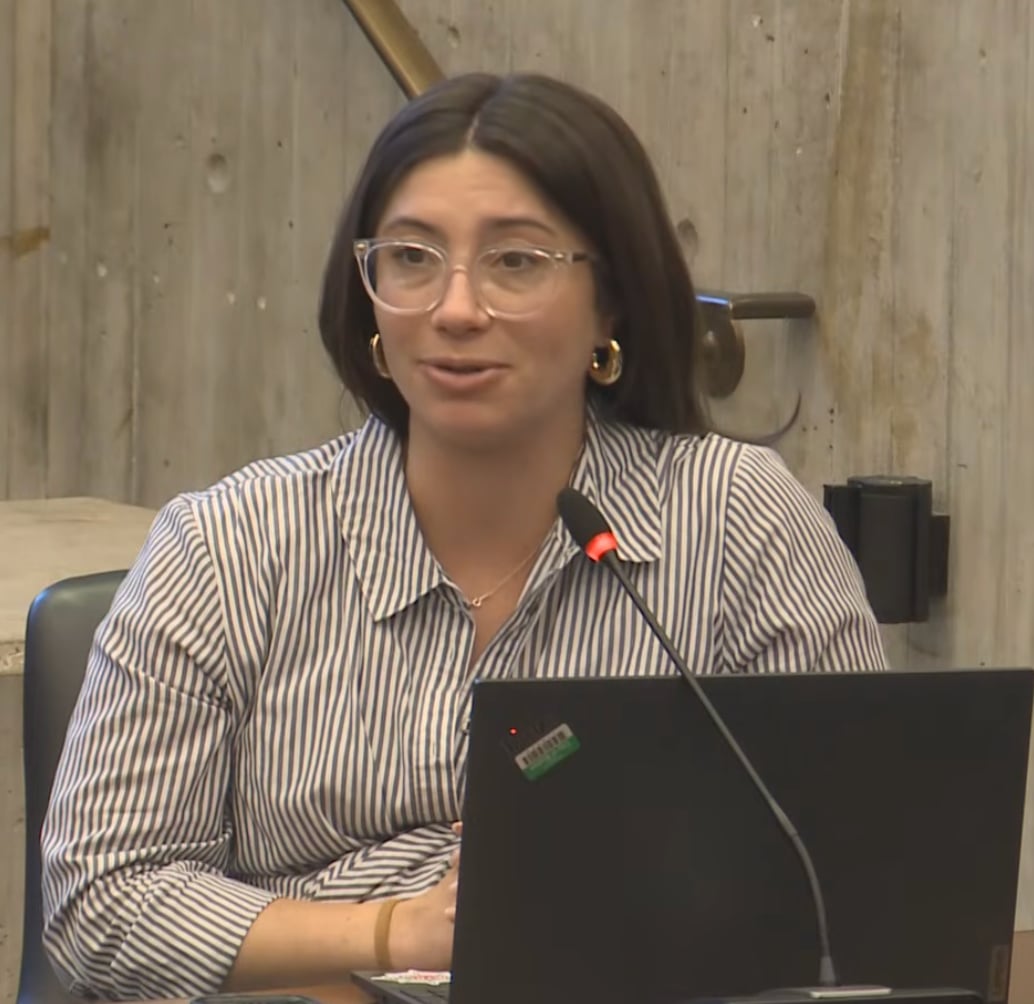
Councilor Gabriela "Gigi" Coletta Zapata at Thursday's Ways and Means hearing on the FY27 appropriation for the Office of Participatory Budgeting. (Credit: Boston City Council video)
"There's been a lot of misinformation about — I think specifically — that the teenagers that are able to participate in this process, for I don't know what the intention is," she told the hearing. "Maybe it's to rage bait or fear bait people into getting clicks or likes or fake kudos."
It was a remarkable performance. The "misinformation" Coletta was attributing to bad actors had, in fact, just been confirmed on the record by Castelo — the very director she had taken the microphone to defend. And the voters she kept calling "teenagers" are — by the rule she was defending, and the testimony she had sat through — children as young as 11. Elevens and twelves, as Flynn had already pointed out, are in fifth and sixth grade.
Coletta's office has not responded to prior requests for comment from this outlet.
What Wu is — and isn't — cutting
ADVERTISEMENT · Interested in advertising?
ADVERTISEMENT · Interested in advertising?
Wu's answer to the $48 million shortfall — which her administration has blamed primarily on snow-removal costs and police overtime — is the sort of discipline the moment demands: a hiring freeze, a 2 percent cut mandate for department heads, and new limits on food, travel, office supplies, and building repairs. Her FY27 proposal axes 285 vacant city positions on top of 500 already cleared. The belt is tightening across City Hall — and in the classroom, too, where Boston Public Schools, carrying its own $53 million deficit, has frozen hiring and is weighing as many as 400 layoffs.

Mayor Michelle Wu with members of the Boston City Council at City Hall Plaza for the city's Veterans Day Parade, Nov. 9, 2024. (U.S. Army photo by Shawn Morris, via Wikimedia Commons, public domain)
"We know it works when we're able to invest directly in community," Wu said of the cuts. "Unfortunately, this is a moment where we don't have those resources anymore."
The discipline is selective. Wu's signature White Stadium rebuild — the overhaul of a city-owned BPS high school stadium in Franklin Park — has more than tripled in cost to $135 million, a price her administration sat on for a month before telling taxpayers. The $2.2 million participatory-budgeting pot is on the spared list, too. This year, 4,841 voters — any Bostonian 11 or older, citizenship not required, no verification on either count — sent $400,000 to an "Immigrant Legal Defense Fund" that pays lawyers for immigrants "facing detention and deportation," plus another $300,000 to an Immigrant Career Pathways program. Roughly 32 percent of the pot went to those two immigration-specific line items, chosen by a voter pool the city is forbidden, by its own rules, from checking on immigration status.
The other winners: Neighborhood Fresh Food Access ($500,000), Workforce Training in the Trades ($300,000), Youth Financial Literacy ($250,000), a housing-stability fund ($200,000), Small Business Development ($150,000), and a neighborhood-greening project ($100,000).
The program — branded "Ideas in Action" — was approved by Boston voters in a 2021 ballot question and codified by ordinance in 2023. The eligibility rule, published on Boston.gov, is admirably short: "Participatory budgeting voting is open to all Boston residents age 11 and older, regardless of citizenship status."
No age check. No citizenship check. The rule, at least, is honest.
When Wu announced this year's winners in February, she called it a demonstration of "what is possible when residents have a direct voice in shaping Boston's future." Castelo has defended the process as "an exercise in democracy." Councilor Liz Breadon, another Wu ally, calls it "a huge opportunity to develop civic engagement." Councilor Murphy had a blunter read on the administration's broader deficit frame: "This is not just about snow or overtime. This is a structural problem."
The City Council's vote on the FY27 budget is due no later than the second Wednesday in June.
Loading Comments