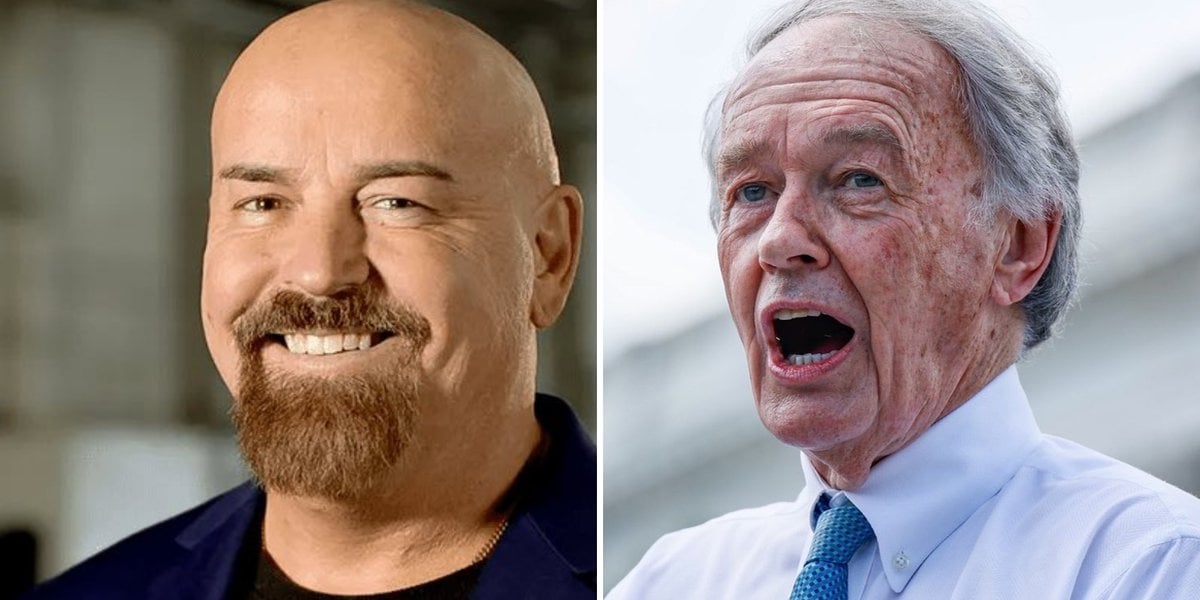
BOSTON — John Deaton has a plan to clean up Congress. His opponent, Ed Markey, has been in Congress since Jimmy Carter was president. The math writes itself.
Deaton, a Marine veteran and Republican candidate for U.S. Senate, unveiled what he's calling the Washington Clean Hands Act — a 17-point anti-corruption overhaul that reads less like a policy proposal and more like a highlight reel of everything voters have been complaining about for decades.
Term limits. A stock trading ban. A lifetime lobbying ban. A requirement that Congress actually read bills before voting on them.
"Washington was never meant to be a career," Deaton said. "My Clean Hands Act starts with cleaning up Congress and will be the first bills I introduce as Senator."
It's a line that lands a little differently when you're running against a man who first took office in 1976.
What's in the plan
The Clean Hands Act covers 17 reforms. Here are the ones that would keep most of Washington up at night:
Congressional term limits — three House terms, two Senate terms. Under this rule, Markey would've been done by the mid-1980s. He's currently in his 50th year.
MASSDAILYNEWS
STAY UPDATED
Get Mass Daily News delivered to your inbox
ADVERTISEMENT · Interested in advertising?
ADVERTISEMENT · Interested in advertising?
No-Trade Zone — a full ban on stock, crypto, and commodities trading by members of Congress. The STOCK Act of 2012 was supposed to handle this. It didn't.
Lifetime lobbying ban — former members of Congress would be permanently barred from lobbying. Currently, the cooling-off period is one year for House members and two for senators. After that, it's open season. Half of Washington's retirement plan just evaporated.
Single Issue Bill Act — every bill must address one topic only. No more 4,000-page omnibus packages stuffed with unrelated spending that nobody reads and everybody votes for at 2 a.m.
Read the Bill Mandate — final bill text must be public and searchable for at least 72 hours before any vote. Apparently, in Markey's 50 years, nobody got around to making this a rule.
No Pay for No Budget — congressional pay gets withheld, non-recoverably, if budgets and appropriations bills aren't passed on time. Not delayed. Withheld.
Dark Money Transparency — 48-hour disclosure of any contribution over $500 to Super PACs or politically active nonprofits.
ADVERTISEMENT · Interested in advertising?
ADVERTISEMENT · Interested in advertising?
End Leadership PAC Slush Funds — leadership PACs that allow special-interest money to be spent on luxury travel, dinners, and personal lifestyle expenses would be abolished.
Mandatory Tax Disclosures — federal candidates would be required to release at least 10 years of tax returns.
The remaining reforms include banning foreign lobbying by former members, creating an independent ethics commission with subpoena power, requiring conflict-of-interest recusals, mandating inflation impact statements for bills over $1 billion, and closing loopholes on shadow lobbying and foreign influence.
The Markey contrast
Deaton isn't being subtle about who this is aimed at. Ed Markey has served in Congress since 1976 — first in the House, then the Senate. He's the co-author of the Green New Deal, a fixture of Massachusetts Democratic politics, and the living embodiment of the career politician Deaton's plan is designed to eliminate.
Whether voters are tired enough of the arrangement to do something about it is the question. Markey survived a primary challenge from Joe Kennedy III in 2020. Deaton ran against Elizabeth Warren in 2024 and lost by 20 points.
But Deaton's betting that an anti-corruption message sells differently in 2026 than it did two years ago. And a 17-point plan that would retroactively disqualify your opponent from holding office is, if nothing else, a memorable way to make the case.
Loading Comments