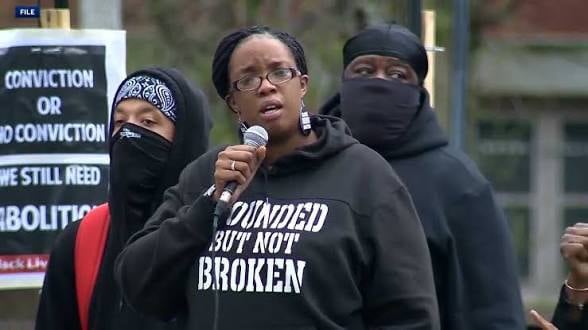
BOSTON — The Boston Globe named her Bostonian of the Year. Boston Magazine called her the city's "best social justice advocate." A federal judge just called her tab: $224,063.
Monica Cannon-Grant, the former community organizer who rose to fame leading a massive 2020 Black Lives Matter march through Boston, was ordered Monday by U.S. District Court Judge Angel Kelley to forfeit every dollar she made from her crimes — from diverting donations from her own nonprofit, collecting fraudulent pandemic unemployment benefits, and pocketing rental assistance she wasn't entitled to.
The forfeiture amount includes roughly $181,000 in diverted donations from Violence in Boston Inc., the nonprofit she founded, more than $33,000 in fraudulent pandemic unemployment benefits, and about $12,600 in rental assistance benefits, according to a copy of the court order.
That's on top of the $106,000 in restitution Kelley already ordered at Cannon-Grant's sentencing in January, when the judge gave her four years of probation, six months of home detention, and 100 hours of community service — no prison time, despite prosecutors requesting 18 months behind bars.
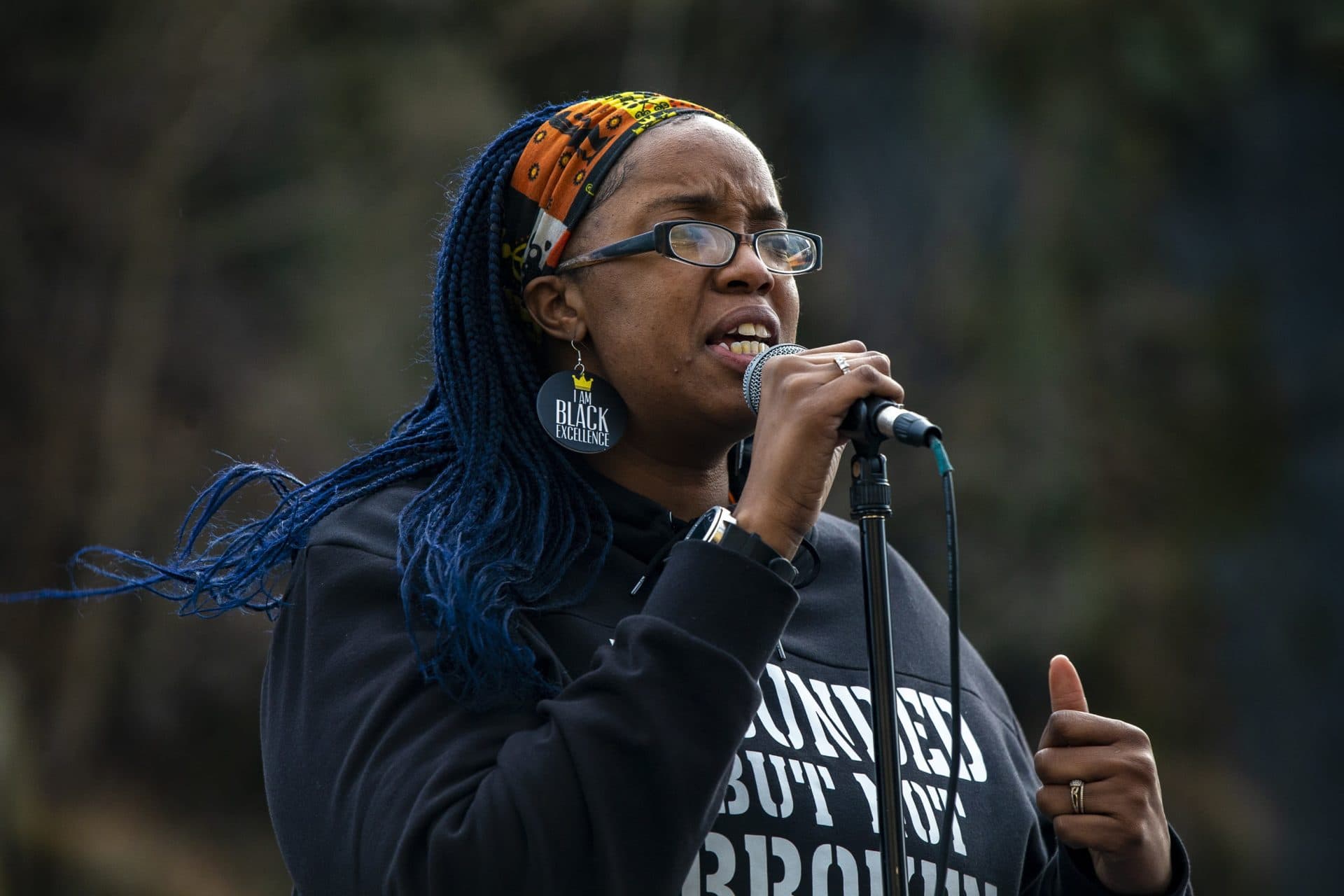
Cannon-Grant speaks at a rally in Boston. Photo: WBUR
From marches to mugshots
MASSDAILYNEWS
STAY UPDATED
Get Mass Daily News delivered to your inbox
ADVERTISEMENT · Interested in advertising?
ADVERTISEMENT · Interested in advertising?
Cannon-Grant founded Violence in Boston Inc. in 2017 out of her home in Roxbury. By 2020, it had expanded to a headquarters in Hyde Park, and she was everywhere. She organized a protest march that drew thousands through Boston's streets after the killing of George Floyd. She collaborated with a Dorchester restaurant to distribute free meals during COVID. The accolades piled up — Globe Magazine's Bostonian of the Year, Boston Magazine's best advocate, a household name in progressive Boston.
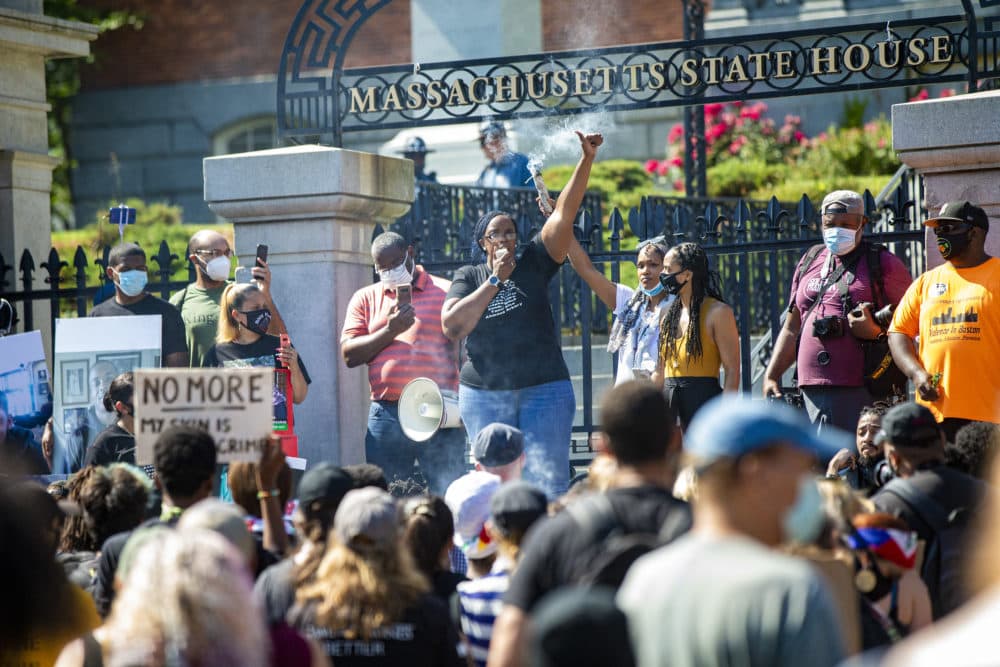
Demonstrators rally at the Massachusetts State House during the 2020 protests — the movement that launched Cannon-Grant to citywide fame. Photo: WBUR
Behind the scenes, according to federal prosecutors, she and her husband Clark Grant were spending the money on themselves. Vacations. Car rentals. Dining out. The couple raised more than $1 million for the charity and received nearly $60,000 in pandemic relief funds intended to feed people in need — then treated it like a personal checking account.
Clark Grant was killed in a motorcycle crash in Easton in March 2023, before the case went to trial.
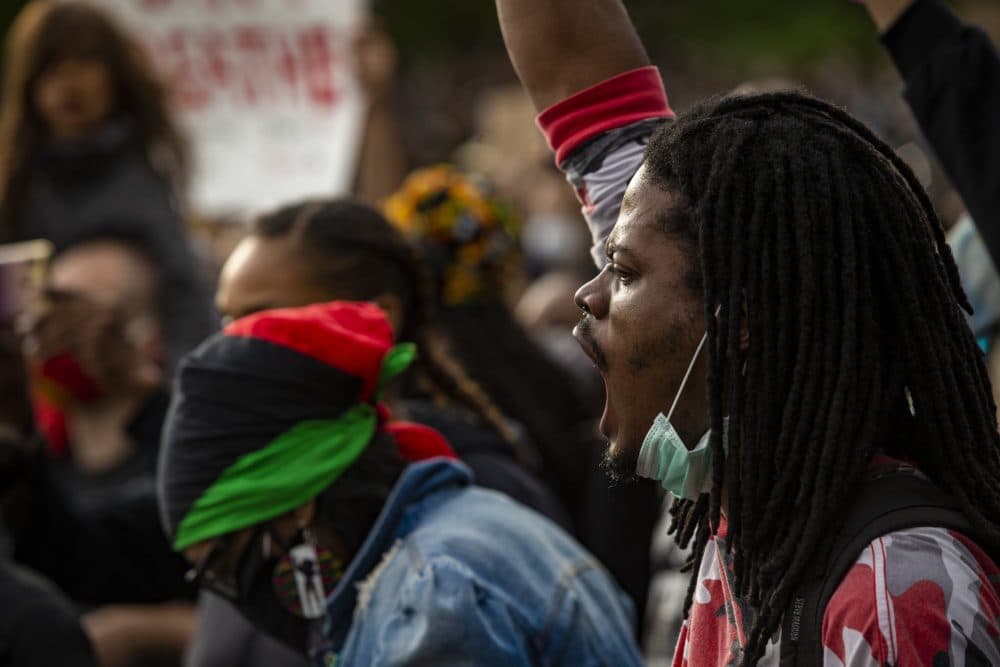
Demonstrators during a 2020 BLM vigil in Boston — events like these helped Cannon-Grant raise more than $1 million in donations for her nonprofit. Photo: WBUR
ADVERTISEMENT · Interested in advertising?
ADVERTISEMENT · Interested in advertising?
"Full ownership" with an asterisk
In September, Cannon-Grant pleaded guilty to 18 counts of conspiracy to commit wire fraud, wire fraud, mail fraud, and tax violations. In exchange, prosecutors agreed to dismiss nine counts related to allegations of mortgage fraud.
At her January sentencing, Cannon-Grant told Judge Kelley she took "full ownership" of her actions. She also said she was "extremely proud" of the nonprofit's work during the pandemic.

The John Joseph Moakley United States Courthouse in Boston, where Cannon-Grant pleaded guilty to 18 federal charges. Photo: 4300streetcar / Wikimedia Commons (CC BY 4.0)
Monday's forfeiture order puts a final number on it: $224,063 in proceeds from crimes committed against the very community she claimed to serve. Whether Cannon-Grant can actually pay it back is another question entirely.
Loading Comments