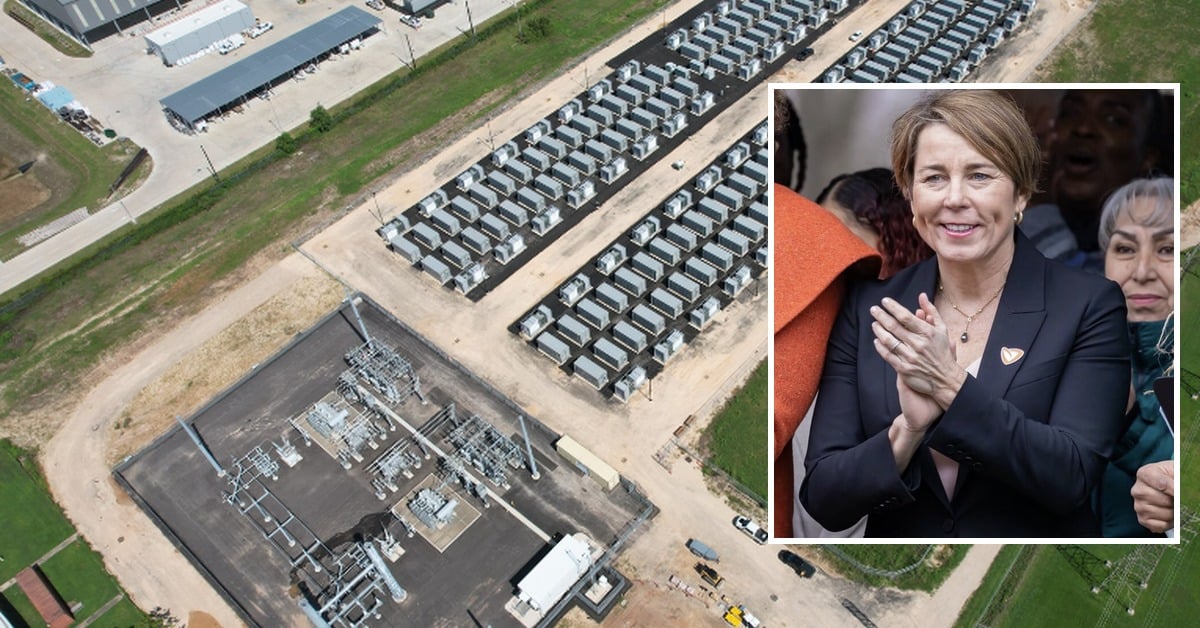
EVERETT — The Healey administration has approved the largest lithium battery farm in Massachusetts history — a $500 million, 700-megawatt complex on 20 acres of a former ExxonMobil tank farm in one of the most densely populated cities in the state — and waived its own environmental review to do it.
The Trimount Energy Storage facility will sit along the Everett waterfront, near the Encore Boston Harbor casino and the site of a planned 3,200-unit housing development. More than 800 lithium-ion battery enclosures — each roughly 20 feet long, 8 feet wide, and nearly 10 feet tall — will be packed side by side across the site.
The developer is Jupiter Power, a Texas-based company whose largest completed projects to date are 200-megawatt facilities in Texas. The Everett project is three and a half times larger.
Former Mayor Carlo DeMaria fought the project through the entire permitting process. "We don't need any more black smoke in our city," he said. The state overruled him.
The waiver
Secretary of Energy and Environmental Affairs Rebecca Tepper granted a MEPA waiver, letting the project skip the standard Massachusetts Environmental Policy Act review.
Her stated reason: the project "supports the transition to a clean energy grid such that further MEPA review would delay these public benefits."
Private housing developers in Massachusetts routinely face years of environmental review. The $500 million battery farm next to 3,200 planned homes got a waiver.
MASSDAILYNEWS
STAY UPDATED
Get Mass Daily News delivered to your inbox
ADVERTISEMENT · Interested in advertising?
ADVERTISEMENT · Interested in advertising?
'We don't need any more black smoke'
Lithium-ion battery fires can reach thousands of degrees, burn for hours, reignite after suppression, and produce toxic smoke clouds. A single battery catching fire can trigger a chain reaction across an entire complex.
In January 2025, a lithium battery storage plant in Moss Landing, California burst into flames and forced the evacuation of roughly 1,200 residents. The fire reignited in February.
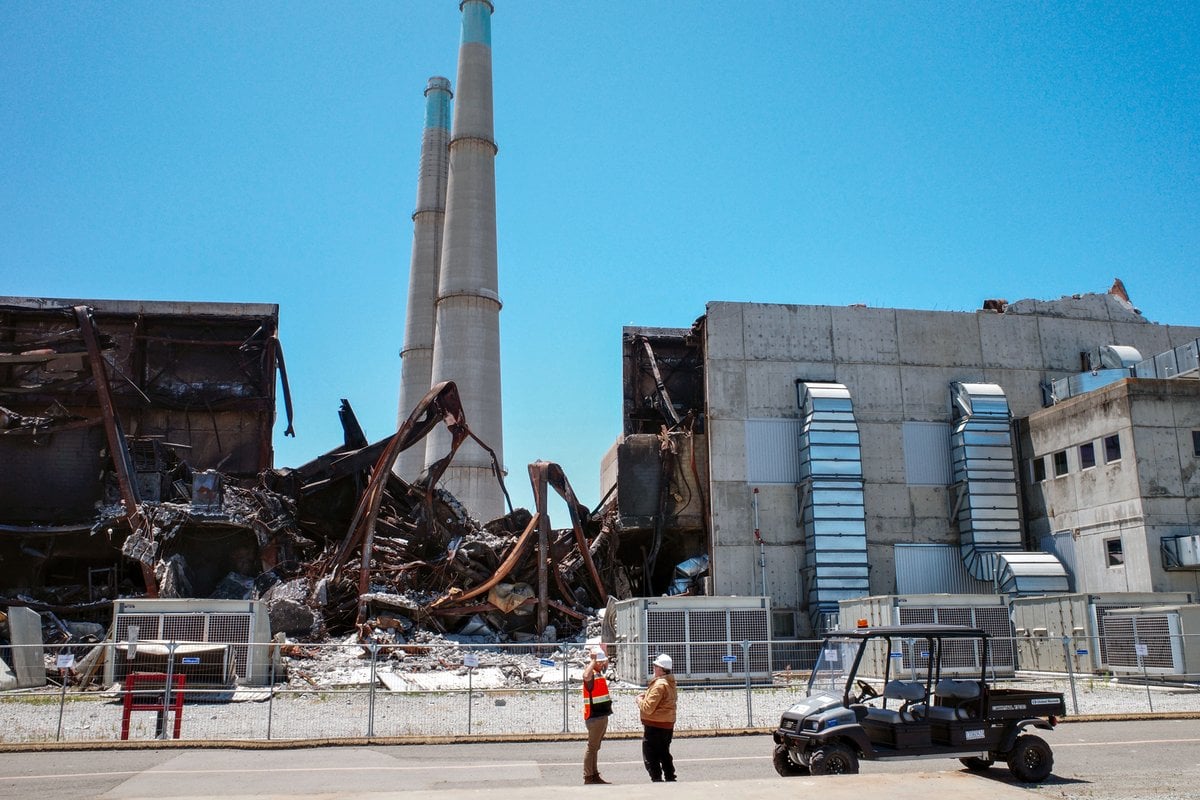
The remains of the Vistra battery storage facility in Moss Landing, California, after a lithium-ion fire broke out in January 2025, forcing the evacuation of more than 1,500 residents. The fire forced evacuations and reignited weeks later. The Everett complex will be nearly the same size. (U.S. EPA)
The largest operational battery complex in the country — an 821-megawatt facility in Kern County, California — sits in the middle of the desert. The Everett facility will sit next to a casino, a hotel, and thousands of planned apartments.
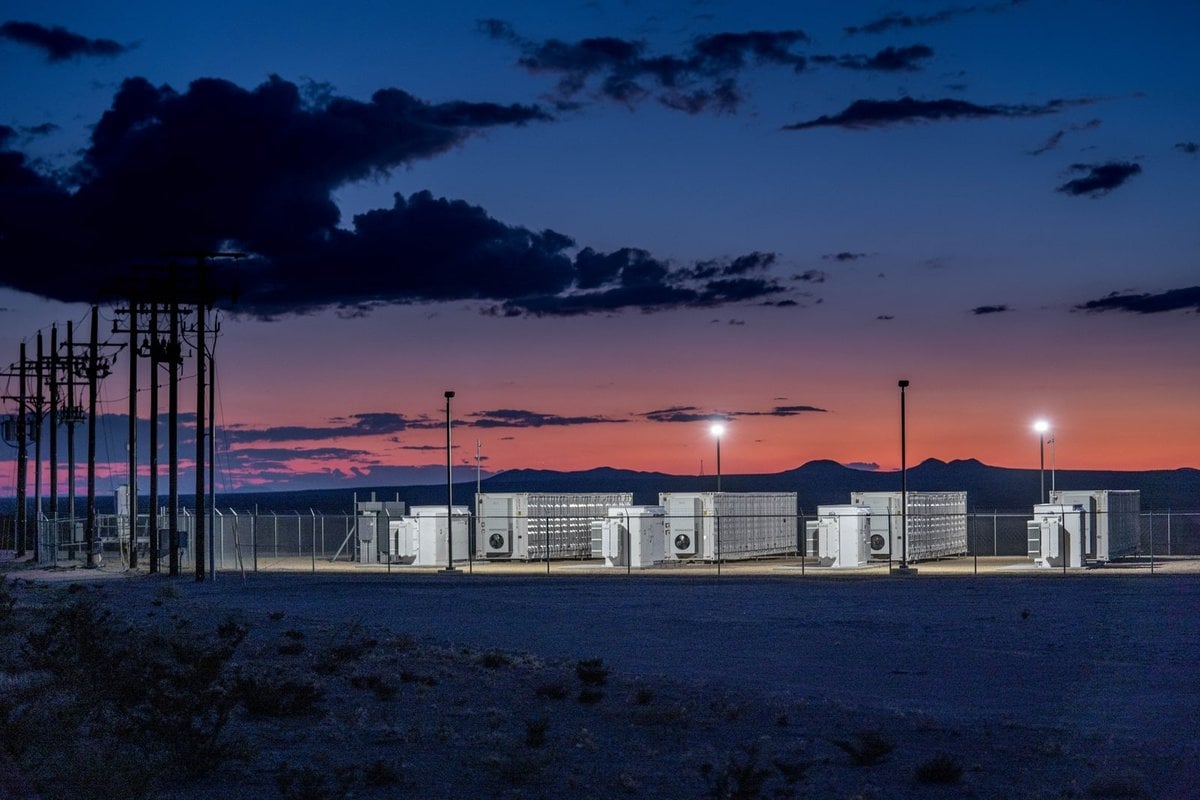
A Jupiter Power battery energy storage facility in West Texas, where the company has built all of its projects to date. The Everett facility will be more than three times larger and surrounded by residential neighborhoods. (Jupiter Power)
ADVERTISEMENT · Interested in advertising?
ADVERTISEMENT · Interested in advertising?
Laurie Belsito, policy director of the Massachusetts Fiscal Alliance, said the 20-acre site forces hundreds of battery enclosures to be packed together, and a single ignition could cascade across the entire complex — producing toxic smoke that could drift across metropolitan Boston.
The deal
Jupiter Power will pay roughly $50 million in taxes to Everett over 20 years. The company is getting a $500 million facility in a state desperate to hit its renewable energy targets.
The battery farm is not going to Wellesley, Newton, or Beacon Hill. It's going to Everett — a working-class city where the median household income is around $80,000.
Construction is expected to begin in 2026 or 2027, with the facility potentially operational by 2028 or 2029. The battery farm is Phase 1 of a larger development called the "Everett Docklands Innovation District" — 3,200 housing units, 3.3 million square feet of lab and office space, and hundreds of thousands of square feet of retail.
The batteries go in first. The housing goes in next to them.
Loading Comments