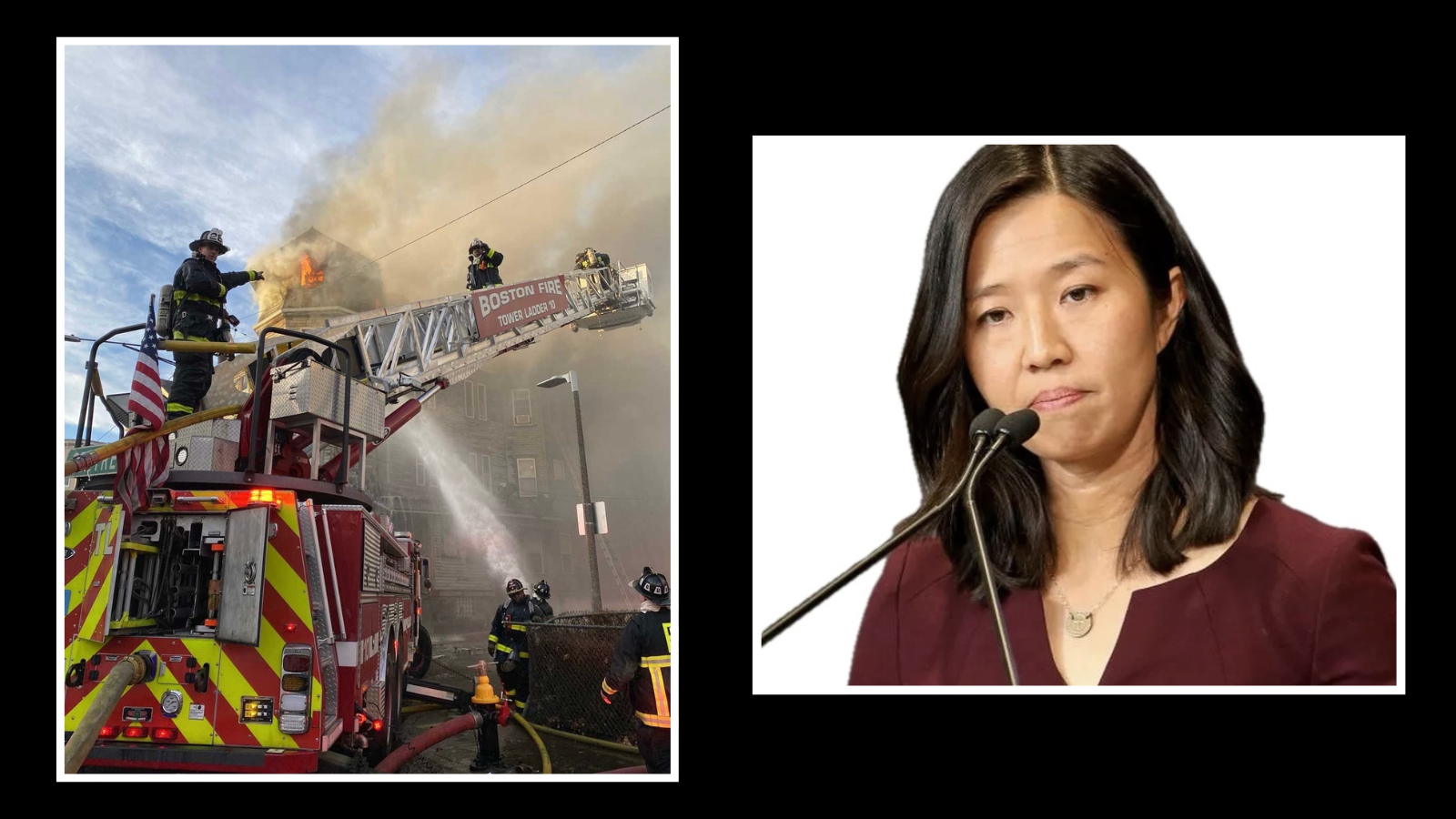
There is a way to give firefighters a raise and still send a message that City Hall does not truly value them. Boston just found it.
Under Mayor Michelle Wu, Boston firefighters are set to receive annual raises of roughly 2 percent — modest increases that barely keep pace with inflation, let alone the rising cost of living in one of the most expensive cities in the country. At the same time, the mayor herself is on track for a massive roughly 20 percent salary increase, lifting her pay from about $207,000 to $250,000.
The contrast is difficult to ignore.
The newly approved contract between the city and the Boston Firefighters Union spans four years and is valued at approximately $90 million. It covers roughly 1,500 firefighters and includes a 2.5 percent raise in the first year, followed by 2 percent annual raises in each of the remaining three years, along with limited longevity adjustments and benefit changes.
Spread across the workforce and the life of the contract, these increases amount to incremental gains — not a meaningful shift in firefighters’ economic reality.
Firefighters are not asking to get rich. They are asking for compensation that reflects the risks they take, the hours they work, and the reality that Boston has become increasingly unaffordable for middle-class public servants. A 2 percent annual raise is a maintenance adjustment. After taxes, rising healthcare costs, housing, and inflation, it often means staying in place — or falling behind more slowly.
That reality is especially hard to square with the broader experience of Boston residents under this administration.
MASSDAILYNEWS
STAY UPDATED
Get Mass Daily News delivered to your inbox
ADVERTISEMENT · Interested in advertising?
ADVERTISEMENT · Interested in advertising?
Property taxes have risen in back-to-back double-digit years. Housing production has slowed sharply from earlier peaks. Affordability has worsened. Fewer permits are being pulled, fewer homes are coming online, and the pressure on working families continues to grow. In short, the basic cost of living in Boston is rising faster than paychecks for the people who keep the city safe.
Yet amid higher taxes, weaker housing output, and slowing growth, the mayor’s own compensation is increasing by more than one-fifth.
It is increasingly difficult to argue that this mayoral term has been a success by any broad, measurable standard. Much of the mayor’s energy appears focused on high-profile fights with the federal administration and symbolic political battles, while core municipal issues — housing, affordability, public safety staffing, and basic city services — continue to deteriorate.
At the same time, the mayor routinely panders to a narrow, highly ideological slice of the electorate that reliably applauds her rhetoric, even as everyday residents and front-line workers shoulder higher taxes, higher costs, and greater strain.
In practical terms, the message to firefighters is unmistakable: sacrifice is expected, patience is required, and restraint applies — but not universally.
Firefighters face staffing shortages, mandatory overtime, increased call volumes, and expanding responsibilities tied to homelessness, addiction, and mental health crises. They respond to medical emergencies, violent incidents, building collapses, and large-scale disasters — often in aging infrastructure, with equipment that demands constant maintenance. These are not abstract challenges. They are daily realities.
ADVERTISEMENT · Interested in advertising?
ADVERTISEMENT · Interested in advertising?
Against that backdrop, a modest 2 percent raise can feel less like recognition and more like a box checked.
This is not just about one contract or one mayor. It reflects a broader pattern in Boston governance, where compensation at the top continues to rise while front-line workers are told to be patient, pragmatic, and grateful. The gap between City Hall and the firehouse has become increasingly visible — and increasingly political.
Morale matters in public safety. Recruitment matters. Retention matters. When firefighters see senior officials receiving double-digit percentage increases while they negotiate single-digit ones, it reinforces a sense that sacrifice flows in only one direction.
No one is arguing that the mayor should not be paid well. But leadership is ultimately measured by outcomes — and by priorities.
A city that truly values its firefighters would aim higher than symbolism. It would recognize that public safety is not a cost to be managed down, but a foundation to be strengthened.
Boston firefighters will continue to do what they have always done: show up, suit up, and protect the city. The remaining question is whether City Hall is willing to show — in concrete terms — that it values them as much as it values itself.
Loading Comments