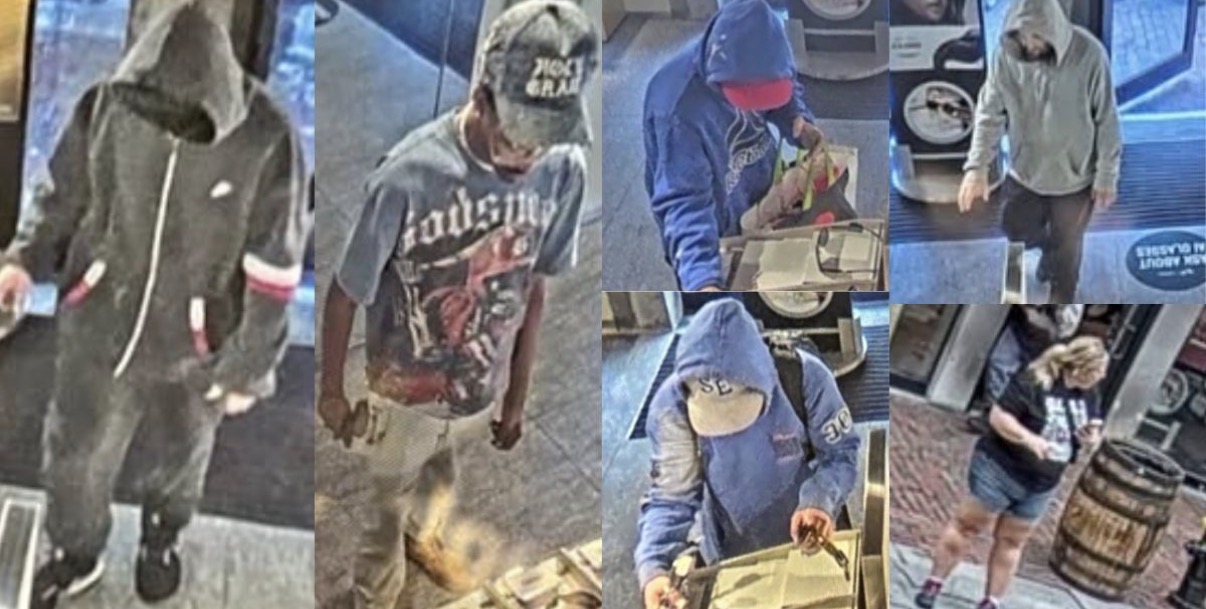
BOSTON — Once-bustling shopping streets across Boston are now plagued by theft, as brazen shoplifters repeatedly target some of the city’s most iconic retail destinations, leaving workers shaken, shoppers uneasy, and business owners questioning whether the city has lost control.
From the luxury storefronts of Newbury Street to the tourist-packed corridors of Faneuil Hall and the upscale interior of the Prudential Center, shoplifting has become a visible, almost routine feature of daily life. Employees describe thieves walking in confidently, grabbing merchandise in plain view, and leaving without resistance — sometimes alone, sometimes in groups, often returning days later.
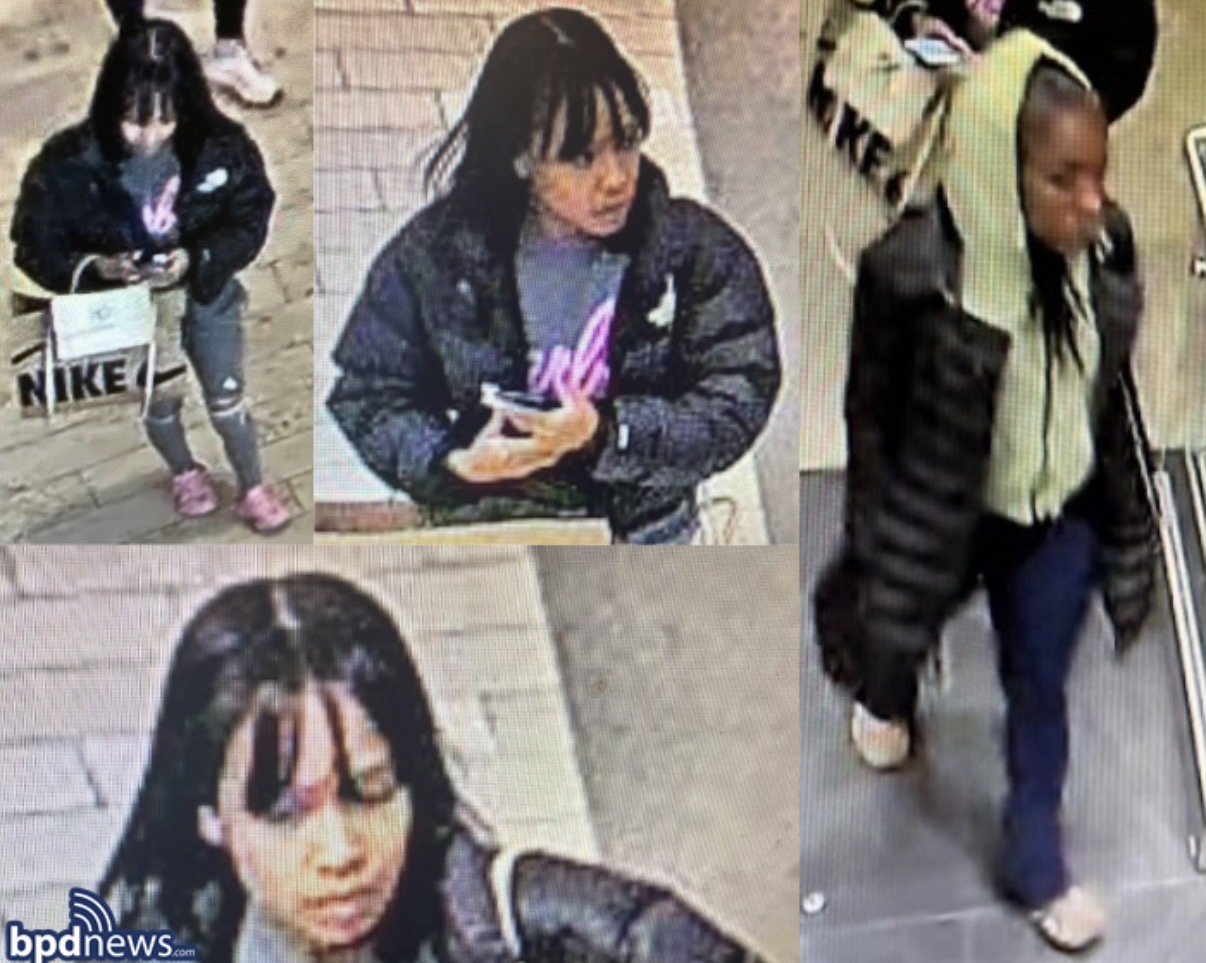
Surveillance images show suspects wanted in a series of retail thefts as shoplifting becomes a routine sight in Boston’s shopping districts
On Newbury Street, the Lululemon store has been hit multiple times, including incidents in which suspects ran out with armfuls of high-priced athletic wear while staff stood by, powerless to intervene. Workers say the thefts are no longer shocking — they are expected.
At Faneuil Hall, a historic centerpiece of Boston tourism, a Sunglass Hut location was targeted seven times over the summer, according to police accounts, with the same store repeatedly hit as thieves made off with thousands of dollars in merchandise. Retail workers in the area say it reached a point where staff recognized suspects before they even entered the store.
Even the Prudential Center mall, long viewed as one of the city’s most polished and secure shopping destinations, has not been spared. Multiple retailers inside the complex — including Lululemon, Alo, and Sunglass Hut — have reported shoplifting incidents involving coordinated groups who fled when confronted, sometimes causing disturbances in the process.
Employees across these locations tell a similar story: thieves act boldly because they believe nothing will happen. Staff are instructed not to pursue. Shoppers watch thefts unfold in real time. Security, when present, is often outmatched or ignored.
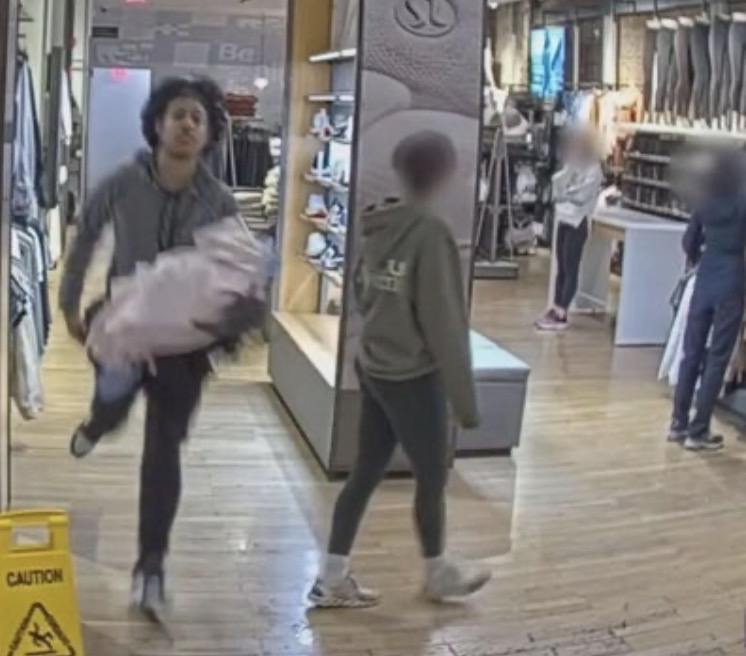
A shoplifter bolts from a store carrying stolen goods as retail theft becomes increasingly visible in Boston
MASSDAILYNEWS
STAY UPDATED
Get Mass Daily News delivered to your inbox
ADVERTISEMENT · Interested in advertising?
ADVERTISEMENT · Interested in advertising?
The consequences have been baked into the retail experience for years. Across Boston, everyday items sit locked behind glass, forcing customers to hunt down employees just to buy basic goods — a setup more common in cities that have surrendered to retail crime. Store owners quietly point to Democrat-led policies that softened penalties, deprioritized enforcement, and reframed shoplifting as a social condition rather than a crime. The result is a shopping experience built around inconvenience, distrust, and the expectation that theft is simply part of city life.
Police officials have begun publicly acknowledging the scale of the problem. Boston Police Commissioner Michael Cox described shoplifting as “an issue in our city,” telling the Boston Herald that officers are now reaching out to retailers and urging businesses to report incidents as police attempt to regain control of commercial hot spots that have deteriorated over several years.
Business leaders say the breakdown didn’t happen overnight. During and after the pandemic, enforcement waned, reporting dropped, and shoplifters grew increasingly brazen. Organized theft rings and repeat offenders allegedly flourished, exploiting a system with little deterrence and reselling stolen goods online with minimal fear of consequences.
Retail advocates also point to Massachusetts’ 2018 changes to larceny laws, which raised the felony threshold to $1,200. Critics argue the move sent a clear signal that most retail theft would be treated lightly, effectively lowering the risk for repeat offenders and emboldening professional shoplifters.
The damage has gone far beyond stolen merchandise. Retailers say losses cut into wages, staffing, and store hours. Workers describe feeling unsafe on the job. Customers avoid stores they perceive as chaotic or poorly protected. Some business owners quietly question whether keeping certain locations open still makes sense.
While retail theft has increased in major cities nationwide, Boston business leaders argue the city’s tolerance allowed the problem to grow unchecked in some of its most visible commercial districts.
ADVERTISEMENT · Interested in advertising?
ADVERTISEMENT · Interested in advertising?
Only recently have city officials begun responding more aggressively.
Boston Police data shows shoplifting arrests have risen sharply in recent months, climbing well above previous years. Officials say the increase reflects renewed enforcement efforts and greater reporting by retailers as part of a coordinated “Safe Shopping Initiative.”
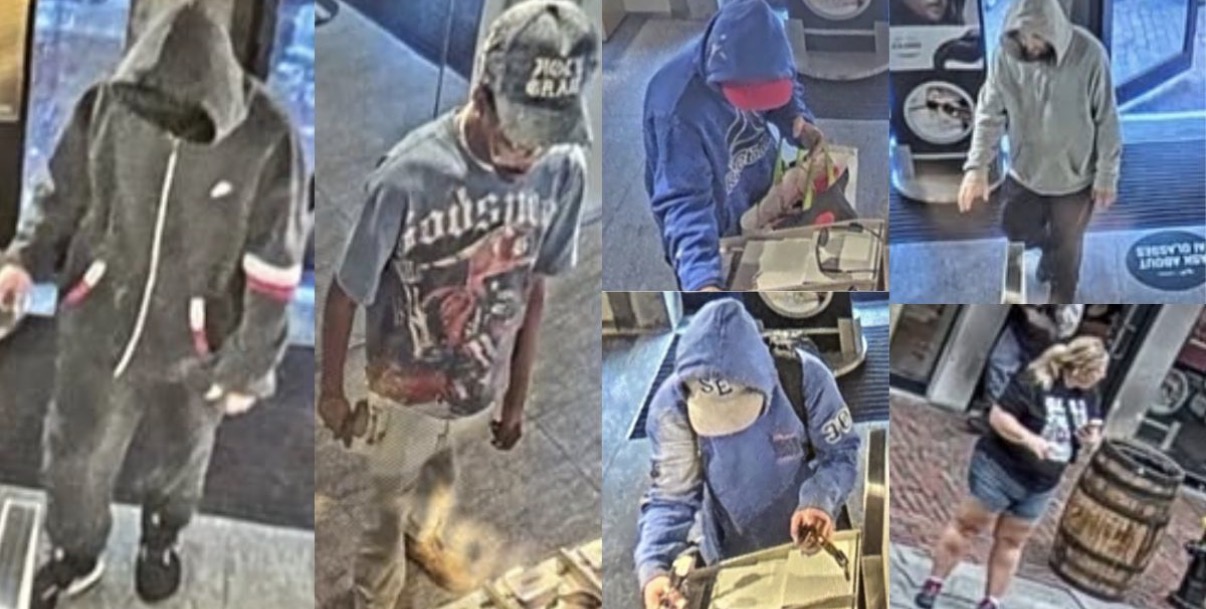
Suspects are seen on security cameras inside the Sunglass Hut at Faneuil Hall amid a string of shoplifting incidents
Prosecutors under Suffolk County District Attorney Kevin Hayden have said the rise in arrests was anticipated once shoplifting became a priority again, marking a clear shift from policies under former DA Rachel Rollins, who had deprioritized shoplifting and other misdemeanor offenses.
For many retailers, however, the renewed attention feels overdue.
After years of looking the other way, Boston is now scrambling to contain a shoplifting crisis that has already reshaped its shopping streets — turning once-vibrant retail corridors into symbols of a city struggling to reassert basic order.
Loading Comments