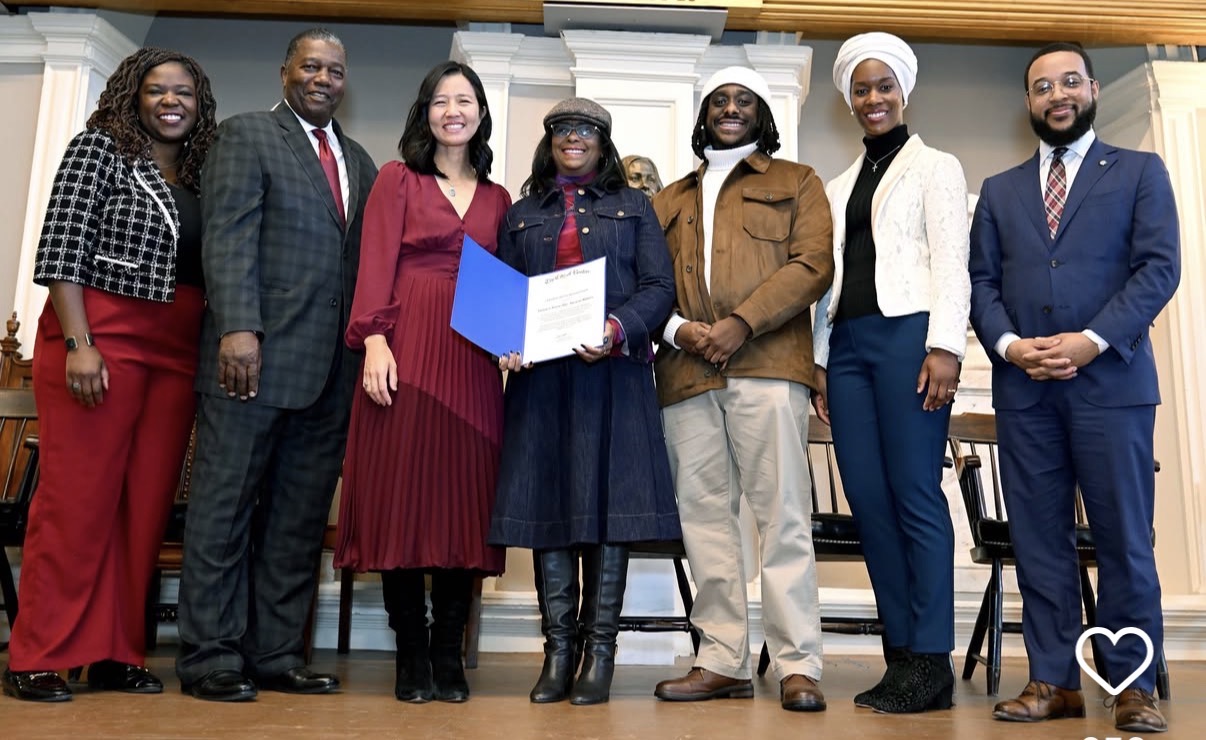
BOSTON — Mayor Michelle Wu is celebrating as almost $1 billion in taxpayer funds have flowed to women- and minority-owned businesses, a milestone City Hall is proudly touting even as Boston’s downtown economy continues to sputter and commercial property values crater.
In glossy social media posts and carefully staged ceremonies, the Wu administration has highlighted what it calls historic gains in “equitable contracting,” boasting of a 94 percent surge in awards to certified businesses since she took office. City officials describe the spending as proof that Boston is “doing things differently.”
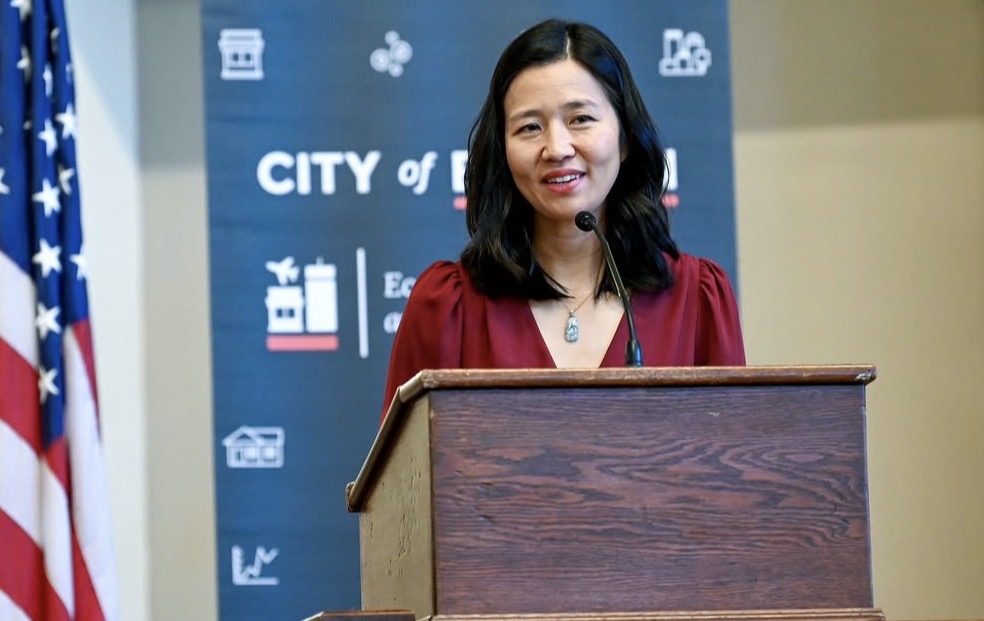
Michelle Wu smiles at the podium as City Hall celebrates nearly $1 billion in taxpayer funds flowing to women- and minority-owned businesses — even as Boston’s downtown economy continues to struggle.
But outside City Hall, the mood is far less celebratory.
MASSDAILYNEWS
STAY UPDATED
Get Mass Daily News delivered to your inbox
ADVERTISEMENT · Interested in advertising?
ADVERTISEMENT · Interested in advertising?
Office vacancies remain stubbornly high, commercial valuations are down, and the city’s once-reliable downtown tax base — which helps shield homeowners from tax hikes — is under serious strain. As that base weakens, residents are increasingly asking whether someone else will be left holding the bag.
Adding fuel to the backlash is the image City Hall chose to showcase. Standing prominently in the photo is Segun Idowu, the senior official charged with economic opportunity and inclusion — and, critics note, one of the figures most closely associated with the city’s struggling commercial recovery.
Idowu, a history major on an eye-popping nearly $200,000 taxpayer-funded salary, is now under intensifying scrutiny as Boston’s downtown economy continues to slide. Detractors argue that at a moment when the city needs aggressive, technically sophisticated leadership focused on commercial revitalization, leasing demand, and investor confidence, City Hall is instead elevating symbolism over experience.
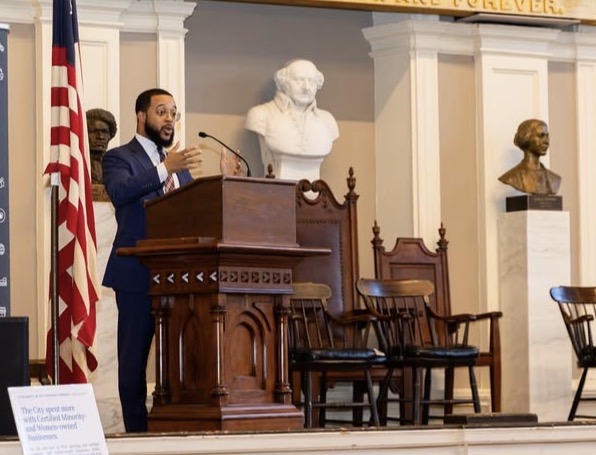
Segun Idowu addresses the audience during an equity contracting event — a history major now overseeing Boston’s economic opportunity agenda as downtown commercial values struggle to recover.
ADVERTISEMENT · Interested in advertising?
ADVERTISEMENT · Interested in advertising?
Those frustrations have now spilled into open calls — framed by critics as opinion — for Idowu to be fired and replaced with a more suitable candidate, someone with real-world expertise in commercial real estate, finance, and economic turnaround strategy. The argument is blunt: Boston doesn’t need another celebration, it needs results.
City Hall insists the nearly $1 billion in equity-focused contracting represents long-overdue progress and economic justice. Supporters say the money helps small businesses grow and keeps public dollars circulating locally.
But for many residents watching downtown struggle and taxes loom, the optics are jarring: a City Hall throwing itself a party while the city’s economic engine coughs and sputters.
As Boston heads into another budget cycle, the question hanging over the celebration is simple — is this leadership focused on rebuilding the city’s future, or just applauding itself while warning signs flash red?
Loading Comments