
Picture this: you’re applying for a job with the City of Boston.
You scroll past the duties. You skim the qualifications. And then, before you even hit “apply,” City Hall tells you something else — not about the role, but about itself.
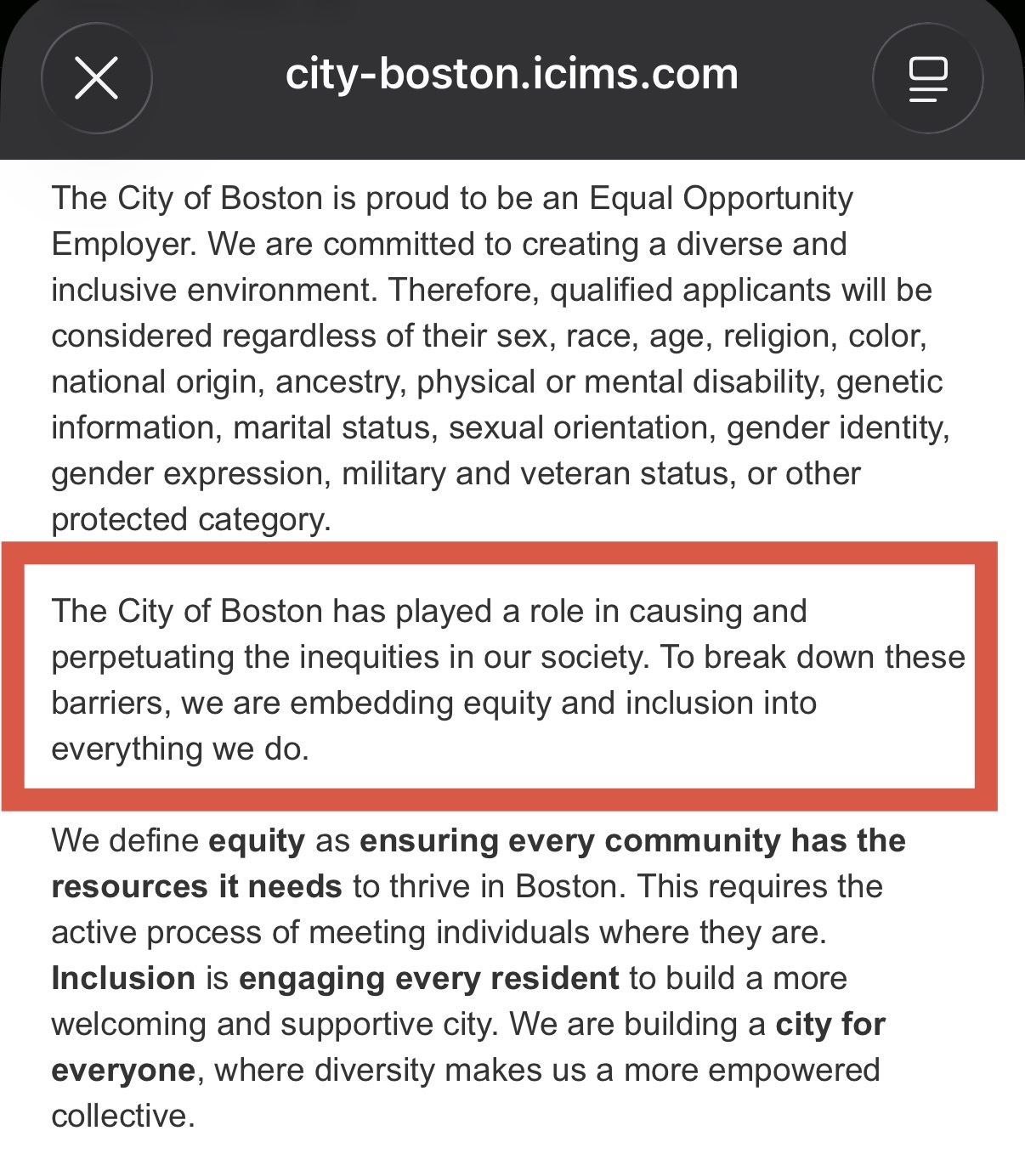
According to the job posting, Boston’s municipal government says it has “played a role in causing and perpetuating the inequities in our society” and is now “embedding equity and inclusion into everything we do.”
The language appears directly in official job listings, presented as part of the city’s core mission and workplace culture. It is not framed as a political opinion or optional belief, but as a statement of fact about City Hall’s past — and a declaration of how the government now intends to operate.MASSDAILYNEWS
STAY UPDATED
Get Mass Daily News delivered to your inbox
The language marks a clear shift in how the city publicly defines its mission — and its past.
That shift comes as the City of Boston is already facing federal scrutiny on other fronts, including criticism over policies seen as shielding illegal immigrants and resisting federal immigration enforcement. Together, the moves reinforce the perception of a city government increasingly willing to chart its own course, even as tensions with Washington continue to build.
The timing is hard to ignore. With commercial real estate revenues under pressure, office vacancies high, and downtown tax receipts lagging, Boston is more reliant than ever on federal funding to stabilize its budget. Against that backdrop, hard-coding ideological language into hiring materials raises questions about whether City Hall is inviting further conflict at a moment when the city has little financial margin for error.
As federal policy continues to shift — and as administrations signal less tolerance for defiance on immigration and DEI — Boston’s posture risks compounding existing strains. Critics warn the city may be testing limits it cannot afford to test.
In that context, embedding equity language into routine job postings is not just a cultural statement. It is a financial gamble — and one that could prove costly if federal dollars become the leverage point.
Loading Comments