BOSTON — For years, it was a sleepy little advocacy nonprofit with a tiny budget and big slogans.
Then the pandemic hit — and the money started coming in.
Then its CEO went to City Hall.
And that’s when things really took off.
The Black Economic Council of Massachusetts — better known as BECMA — went from scraping by on roughly $147,000 a year to pulling in nearly $6 million annually, according to IRS filings. The growth came in two waves: first into the seven figures during the pandemic-era equity funding boom, then into the multi-millions after the nonprofit’s longtime CEO stepped down for City Hall.All told, that’s an increase of nearly 3,900% in just a few years.
Coincidence? Timing? Or one hell of a glow-up?
From shoestring to seven figures
Before the pandemic, BECMA barely registered on Boston’s nonprofit radar. Low six-figure revenue. Thin margins. Almost no assets. The kind of organization that talked a big game but operated on a shoestring.
Then came 2020 — the pandemic, the racial reckoning, and months of George Floyd–era protests that consumed Boston almost daily and triggered an unprecedented surge in equity-focused funding.
That year, BECMA’s revenue ballooned to about $1.6 million. By 2021, it was still hovering around $1.5 million. The nonprofit had officially cracked seven figures.
Not bad.
But that was just the warm-up.


Enter City Hall
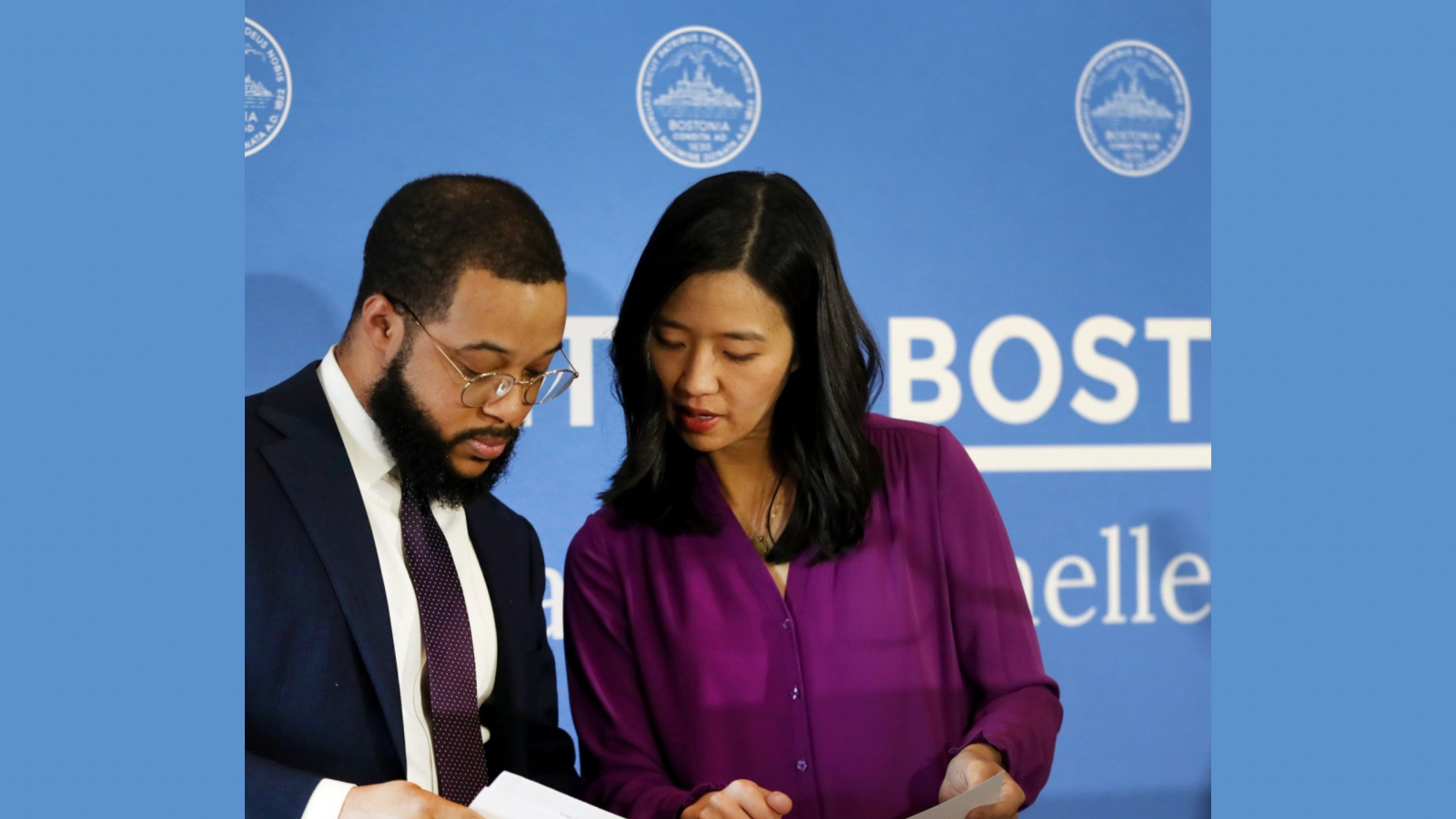
The CEO who stepped down was Segun Idowu — the same Segun Idowu who soon landed a senior role in Mayor Michelle Wu’s administration, where he has been positioned as a key figure in the city’s economic development strategy.So far, that strategy has struggled to deliver results.

Boston’s commercial real estate sector is under severe strain, with office vacancies rising, demand weakening, and valuations sliding. The fallout has rippled outward as small businesses continue to shutter and costs, taxes, and regulatory burdens keep climbing.
Critics say City Hall’s economic approach has leaned heavily on messaging and advisory structures while producing little measurable recovery — and that leadership choices reflect that imbalance. Idowu, a history major by training with no track record overseeing major economic turnarounds, has increasingly become part of that debate.
Whether Boston would benefit from economic leadership with deeper experience navigating downturns is a question being raised more openly as the city struggles to stabilize its commercial core.
What has been easy to measure is spending.
Under the Wu administration, millions of dollars have flowed into nonprofit-run economic and equity initiatives — the same advocacy ecosystem where Idowu built his career and influence. Public announcements and budget documents show a growing reliance on nonprofits to administer programs, distribute grants, and act as middlemen between government and the public.
Against that backdrop, BECMA’s financial transformation stands out.
After Idowu left for City Hall, the nonprofit he once ran suddenly began operating at a scale it had never seen before — taking in millions annually, spending at scale, and paying executive compensation that reflected its new status as a heavyweight institutional player.
MASSDAILYNEWS
STAY UPDATED
Get Mass Daily News delivered to your inbox
There’s no allegation that Idowu runs BECMA today. No claim that laws were broken.
But the overlap — City Hall, nonprofit funding, and a sudden flood of money — has raised eyebrows all the same.
Not a spike. A new normal.
What is BECMA?
BECMA describes itself as an organization focused on advancing the economic well-being of black businesses, organizations, and residents in Massachusetts through advocacy, business development, and strategic partnerships.
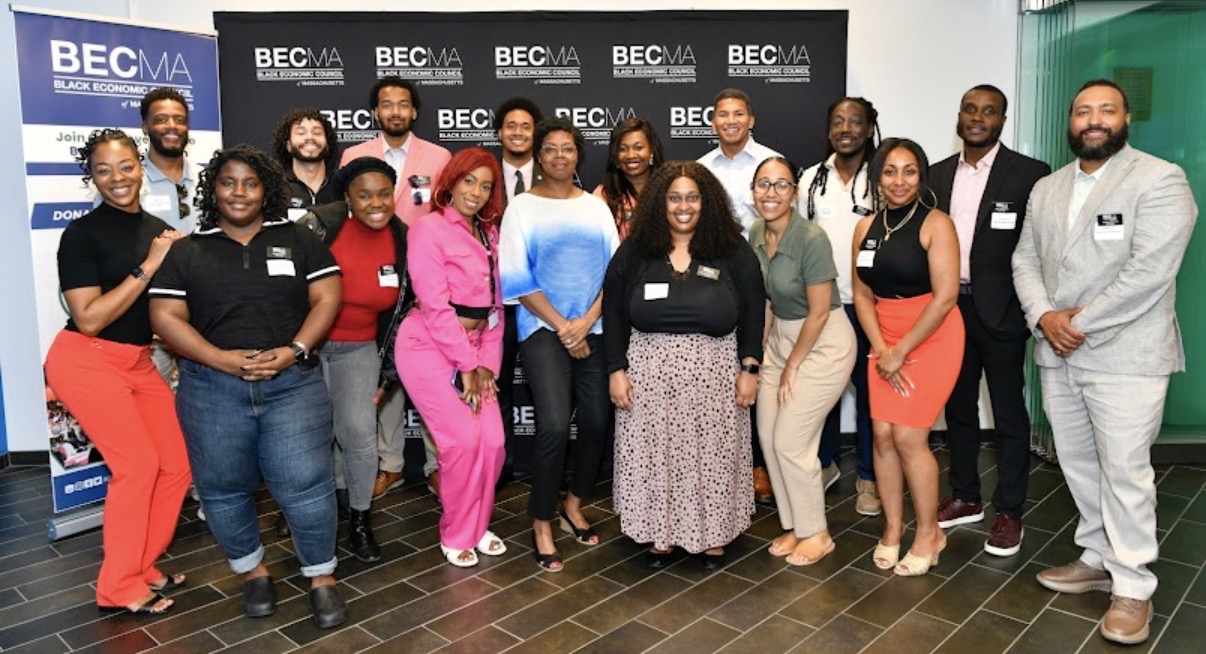
According to its own materials, the group works to influence public policy, engage with elected officials, and connect business owners with capital, technical assistance, and institutional support. Much of that work happens through meetings with policymakers, participation in advisory bodies, and the production of reports and recommendations tied to economic equity.
BECMA also organizes and hosts networking and business-focused events, including large-scale convenings such as the Mass Black Expo, along with summits, panels, and conferences that bring together entrepreneurs, funders, nonprofits, and government officials.
It is not a traditional direct-service charity. BECMA does not operate storefronts or provide daily aid. Its role is primarily advocacy, convening, grant administration, and program management — a model built around coordination, influence, events, and administrative infrastructure, now operating at a multi-million-dollar scale.
A publicly disclosed funding boost
One source of funding is publicly known.
In 2024, Rep. Ayanna Pressley and Sen. Elizabeth Warren announced that they had secured $1 million in federal funding for BECMA through the congressional appropriations process, with the money earmarked for small-business technical assistance. The funding did not come from the City of Boston.
The announcement featured praise from business owners who had received support through BECMA-administered programs. One such quote came from Abdllahi “Mash” Abdirahman, founder of Butterfly Falafel, who thanked BECMA along with Pressley and Warren for providing assistance he said helped his business at a critical time.
Public business listings now show Butterfly Falafel as permanently closed.
The closure does not suggest misuse of funds or wrongdoing. But it does raise a broader question about nonprofit-led economic programs: how success is measured, and whether short-term support translates into long-term business survival.
Showered with millions
According to federal filings, more than 80% of BECMA’s revenue now comes from contributions and grants — not sales, not services, not anything most people would recognize as a traditional business model.
So who’s writing the checks?
That part is conveniently unclear.
IRS rules don’t require nonprofits to publicly list their donors, and BECMA doesn’t publish a contributor roster. The totals are public. The sources are not.
Legal? Yes.
Transparent? Not exactly.
Spending like a big dog
As the money rolled in, BECMA spent it — fast.
Annual expenses exploded from under $200,000 before the pandemic to more than $5.2 million a year. Staff. Consultants. Programs. Events. Panels. Partnerships. Endless meetings. Endless buzzwords.
This isn’t a shelter or a food pantry. It’s an advocacy shop — one that suddenly needs millions a year to keep the lights on.
And about that paycheck…
As BECMA’s budget expanded, executive compensation rose alongside it.
According to IRS Form 990 filings, the nonprofit’s current CEO’s total compensation increased sharply over a short period of time:
- 2022: approximately $200,000 in total compensation
- 2023: approximately $299,000 in total compensation
- 2024: approximately $320,000 in total compensation
Those figures include salary and benefits.

The upward trajectory closely mirrors the nonprofit’s rapid financial growth, marking a clear shift from BECMA’s earlier years, when the organization operated on a far smaller scale and executive pay was significantly lower.
The glow-up that raises eyebrows
The public record tells a simple story.
A small advocacy nonprofit operates quietly for years.
The pandemic-era equity boom pushes it into seven figures.
Its CEO leaves for City Hall.
The organization then enters a new financial league, pulling in millions annually.
Spending surges. Executive pay follows.
Donors, by law, remain unnamed.
Nothing here requires speculation. These are the numbers as reported.
Readers can draw their own conclusions about what this kind of glow-up means — and whether it reflects success, coincidence, or something worth closer scrutiny.
The money is real.
The timeline is real.
And the transformation is impossible to ignore.
Loading Comments