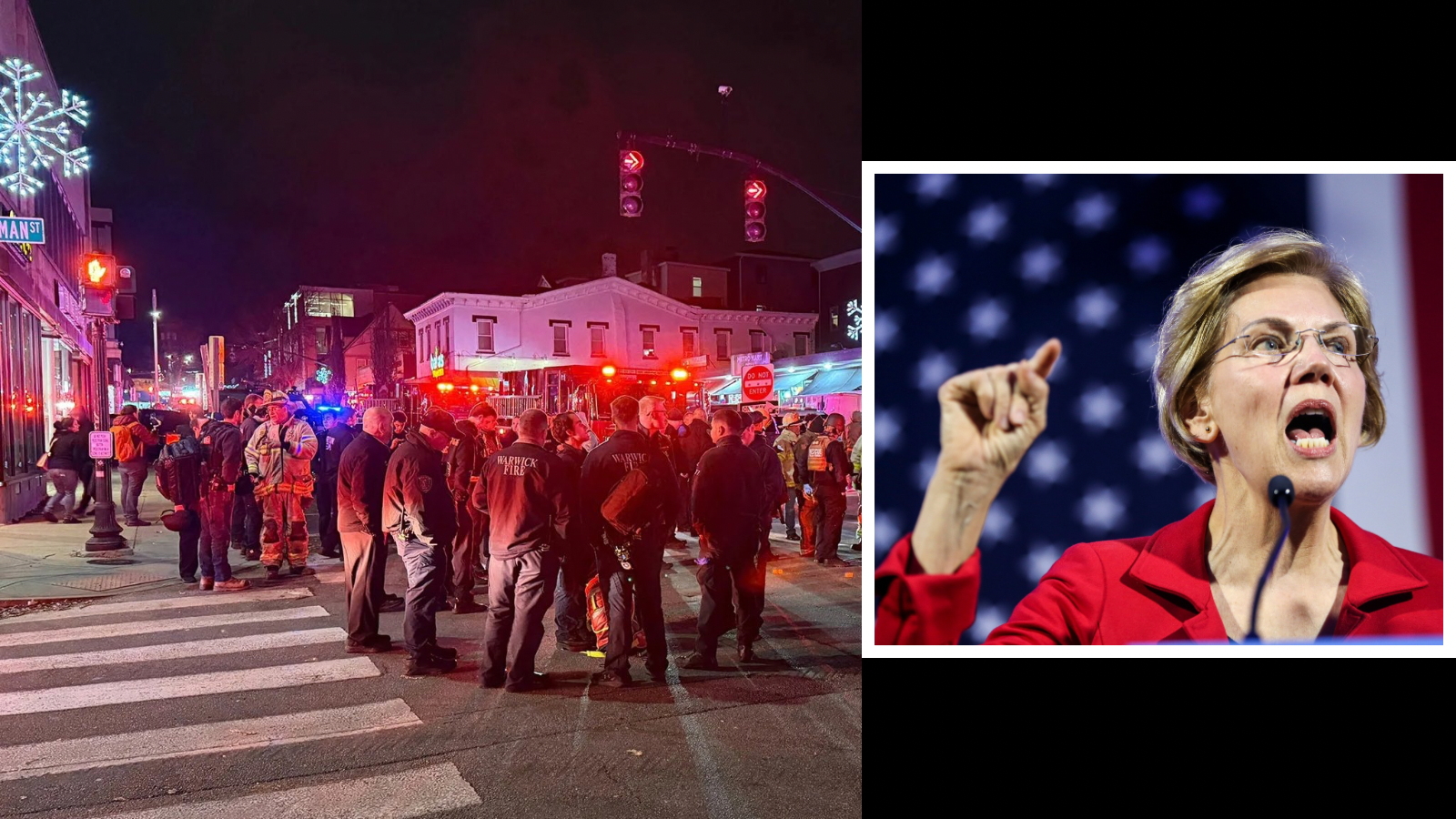
PROVIDENCE, R.I. — A deadly shooting inside the engineering complex at Brown University during finals weekend sent students scrambling for safety — and quickly gave U.S. Sen. Elizabeth Warren a new moment to press her long-standing push for stricter gun laws.
The shooting unfolded Saturday afternoon inside Brown’s engineering and applied sciences building on College Hill, where students were gathered for exam review sessions. Gunfire echoed through the hallways, triggering a campus-wide lockdown as terrified students barricaded themselves in classrooms and offices.
Two people were killed and several others were injured. Providence police, Rhode Island State Police, and federal agents flooded the Ivy League campus, sealing off surrounding streets and conducting building-by-building sweeps as parents and students waited anxiously for updates.
The next day, law enforcement detained a person of interest at a hotel elsewhere in Rhode Island. Officials have not publicly released the suspect’s identity or announced a motive, saying the investigation remains ongoing.
Warren weighed in shortly after the attack, calling the shooting “horrific” and saying students “should be able to learn in peace, not fear gun violence,” language that quickly reignited the national gun debate.
MASSDAILYNEWS
STAY UPDATED
Get Mass Daily News delivered to your inbox
ADVERTISEMENT · Interested in advertising?
ADVERTISEMENT · Interested in advertising?
— Elizabeth Warren (@SenWarren) December 14, 2025The deadly shooting at Brown University is horrific. Students should be able to learn in peace, not fear gun violence. My heart goes out to the victims, their loved ones, and the entire Providence community.
But the senator’s comments were met with swift backlash online, particularly from pro-gun voices who accused her of reflexively politicizing the tragedy. On social media, critics pointed out that Brown University is a gun-free campus and argued that the shooting raised questions about enforcement, security, and preparedness — not a lack of gun laws.
Others questioned how a university with an extensive surveillance camera network and a massive security budget was unable to immediately release a clear image of the suspect inside the engineering building, fueling frustration over what critics described as elite institutional failure rather than a firearms policy gap.
University officials declined to comment on specific security measures, citing the active investigation.
ADVERTISEMENT · Interested in advertising?
ADVERTISEMENT · Interested in advertising?
While Warren did not announce any new legislation tied directly to the Brown shooting, her statement echoed her long-standing support for expanded background checks and broader federal gun restrictions — positions she has repeatedly advanced after mass shootings.
Other New England political leaders largely limited their responses to condolences and support for the Brown community. Warren’s remarks stood out for directly tying the violence to her broader policy agenda, drawing praise from gun-control advocates and criticism from those who argue that gun-free zones and security lapses deserve more scrutiny.
Brown canceled classes and exams in the immediate aftermath as counselors and crisis teams were deployed to support students and faculty shaken by the violence.
As investigators continue piecing together what happened inside the engineering building, the shooting has reignited a familiar debate — not just over guns, but over whether political leaders are targeting the wrong problem while questions about campus security and enforcement remain unanswered.
Loading Comments