
BOSTON — As Mayor Michelle Wu presses a controversial tax overhaul and homeowners brace for consecutive years of double-digit property-tax hikes, one line in the city’s budget stands out above the rest: Boston’s Office of Equity has exploded in size since she took office.
According to Boston operating budget documents, the Office of Equity grew from $880,786 in FY23 to $3.73 million in FY26 — a $2.85 million increase (approximately 323%) in just three budget cycles.
That growth far outpaces inflation, population growth, and most other city departments, and comes as City Hall argues fiscal constraints leave few alternatives to raising taxes or seeking new authority from the state.
A flagship expansion inside City Hall
The Office of Equity now represents one of the fastest-growing administrative units in Boston government. Its expansion has coincided with Mayor Wu’s broader push to embed equity initiatives across city agencies, often through new staffing, programs, and administrative infrastructure.
The surge is notable not only for its size, but for its timing — arriving as Boston’s overall budget pressures intensify and homeowners face mounting tax bills driven by declining commercial property values.
Other DEI offices grow as well
While the Office of Equity accounts for the most dramatic jump, it is not alone.
MASSDAILYNEWS
STAY UPDATED
Get Mass Daily News delivered to your inbox
ADVERTISEMENT · Interested in advertising?
ADVERTISEMENT · Interested in advertising?
The Office of Black Male Advancement increased from $1.39 million to $2.09 million — a $700,000 increase (approximately 50%).
The Office of LGBTQ+ Advancement rose from $477,165 to $820,702 — a $343,537 increase (approximately 72%).
The Office for Immigrant Advancement grew from $2.95 million to $3.58 million — a $630,000 increase (approximately 21%).
The Office of Women’s Advancement grew from $354,687 in FY23 to $643,544 in FY26 — a $288,857 increase (approximately 81%) over the period.
Taken together, DEI-related offices expanded from roughly $10.0 million in FY23 to about $14.7 million in FY26 — a $4.7 million increase (approximately 47%) during Mayor Wu’s tenure.
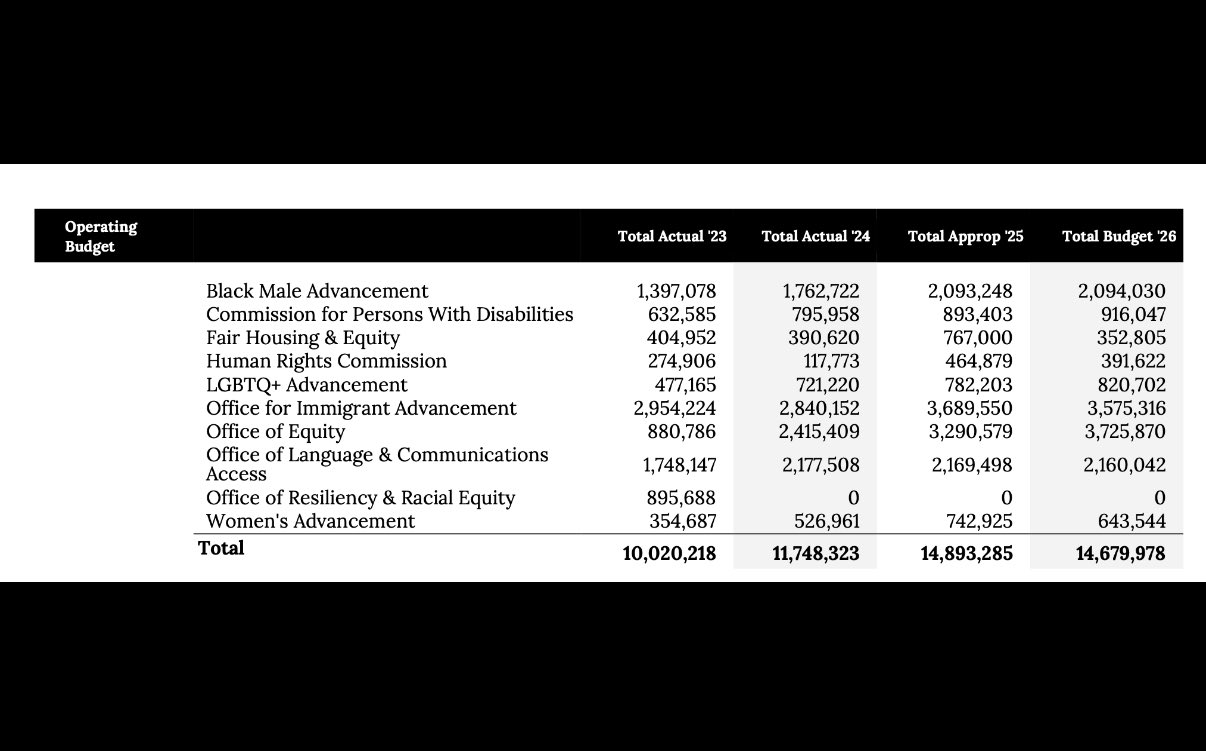
Boston FY23–FY26 operating budget table detailing funding levels for multiple equity and advancement offices.
ADVERTISEMENT · Interested in advertising?
ADVERTISEMENT · Interested in advertising?
Taxpayers feel the squeeze
All of this spending flows through Boston’s operating budget, which relies heavily on property-tax revenue.
At the same time these offices were expanding, Boston homeowners were hit with steep property-tax increases and now face another projected double-digit hike. City officials attribute the pressure to falling commercial real-estate values and structural limits under state law.
Mayor Wu has argued that her proposed tax shift would provide relief, but the plan has stalled in the state Senate for a second straight session, leaving homeowners exposed to higher bills.
A question of priorities
Since Mayor Wu took office, Boston’s total operating budget has grown by nearly $1 billion. Within that growth, the Office of Equity stands out as a clear winner — more than quadrupling while City Hall warns of financial strain.
As the tax debate continues and bills head to mailboxes, the numbers inside the city’s own budget are likely to remain under scrutiny — especially the one showing a 323 percent surge at the heart of Wu’s equity agenda.
Loading Comments