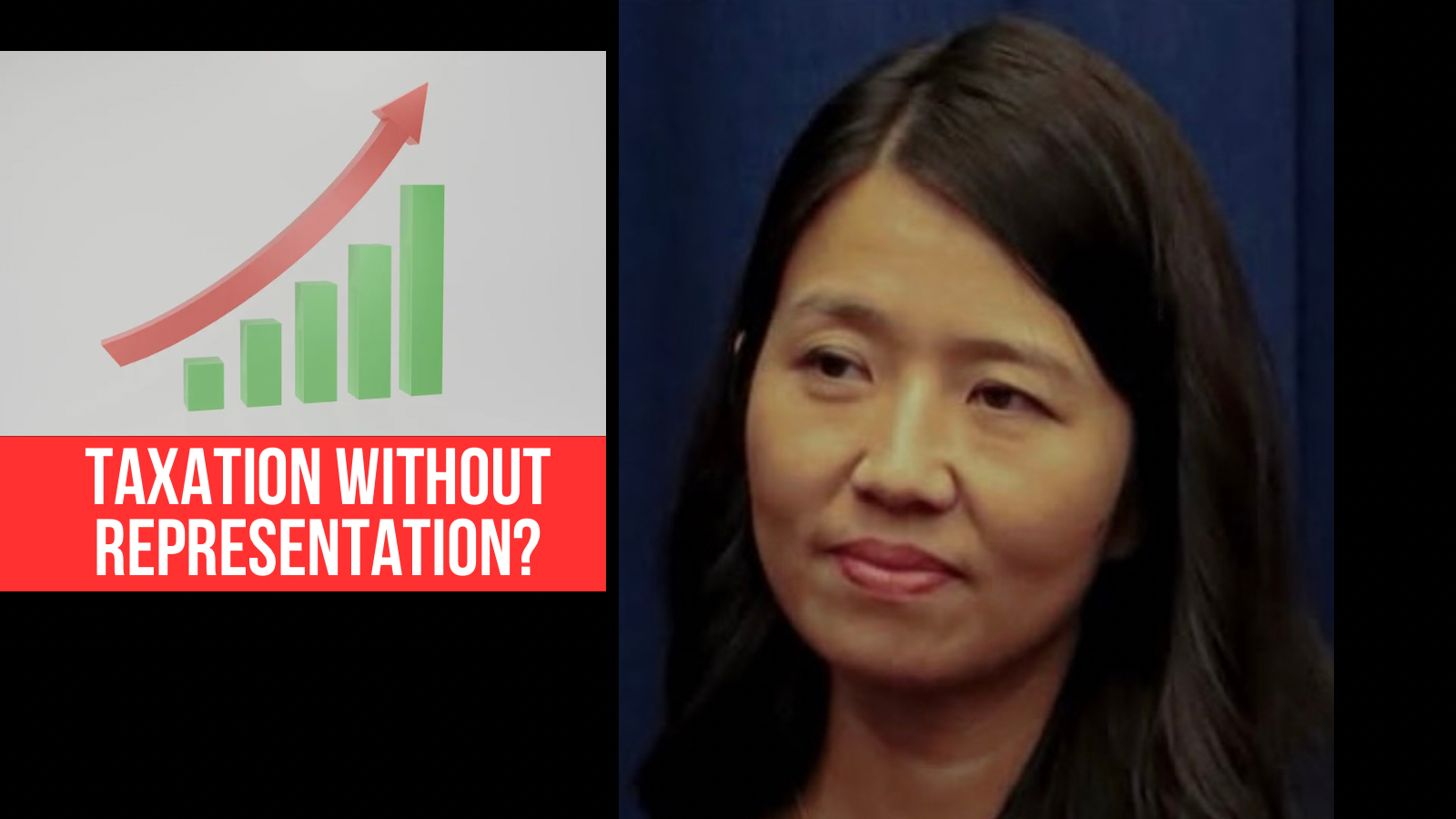
BOSTON — A long-standing Massachusetts law that gives voters direct approval over major property tax increases could be overridden for Boston under legislation supported by Mayor Michelle Wu — a move that would eliminate voter approval for certain property tax shifts in the city.
The law, known as Proposition 2½, limits how much total property tax revenue municipalities can raise each year and requires voter approval when local officials want to exceed that cap. It has applied statewide since voters adopted it in 1980 and is credited with giving residents a direct check on local tax increases.
Under the proposed Boston-specific override, that requirement would no longer apply in the city — meaning certain tax shifts could take effect without a public vote.
A statewide law — and a proposed Boston exception
While the debate has gained attention amid Boston’s rising tax pressures, Proposition 2½ is a statewide policy. It governs property taxation for all 351 municipalities in Massachusetts, from large cities to small suburban and rural towns.
Under current law, a city council or town meeting can propose a so-called “override” or “exclusion” to raise taxes above the limit, but the proposal does not take effect unless a majority of voters approve it at the ballot box.
That approval process would no longer be required for Boston if the proposed exemption is enacted.
MASSDAILYNEWS
STAY UPDATED
Get Mass Daily News delivered to your inbox
ADVERTISEMENT · Interested in advertising?
ADVERTISEMENT · Interested in advertising?
Why repeal — or override — is being discussed
Supporters of changing the law argue that Proposition 2½ restricts local governments’ ability to respond to rising costs, growing populations, and long-term budget pressures. Wu and other backers have described the statute as outdated and say municipalities need greater fiscal flexibility.
Opponents counter that flexibility comes at the expense of voter oversight — particularly at a time when property tax bills are already rising.
Boston, in particular, has seen growing concern over assessments, an expanding city payroll, and increased spending commitments, prompting criticism that City Hall is seeking broader taxing authority rather than tighter cost controls.
What would change for Boston voters
Currently, Massachusetts voters have a statutory right to weigh in directly on certain property tax increases. Overriding Proposition 2½ for Boston would remove that requirement for city residents, shifting final approval from voters to City Hall and Beacon Hill.
ADVERTISEMENT · Interested in advertising?
ADVERTISEMENT · Interested in advertising?
The impact would not be limited to homeowners. Renters could see higher costs passed along through rents, and small businesses could face larger tax bills without the safeguard of a public vote.
Fiscal watchdogs also warn that bypassing ballot questions reduces transparency, since override votes require municipalities to disclose detailed financial plans, timelines, and justifications to the public.
Broader implications
Although the proposal would apply only to Boston, critics warn it could set a precedent for similar exemptions elsewhere, weakening a voter-approved safeguard that has governed local taxation for more than four decades.
They argue that carving out exceptions penalizes communities that have historically managed within the law’s limits, while reducing voter oversight in favor of increased government discretion.
For now, Proposition 2½ remains fully in effect statewide, preserving voters’ role in approving major property tax increases. But the push to override it for Boston has placed that long-standing right squarely at the center of the state’s tax and governance debate.
Loading Comments