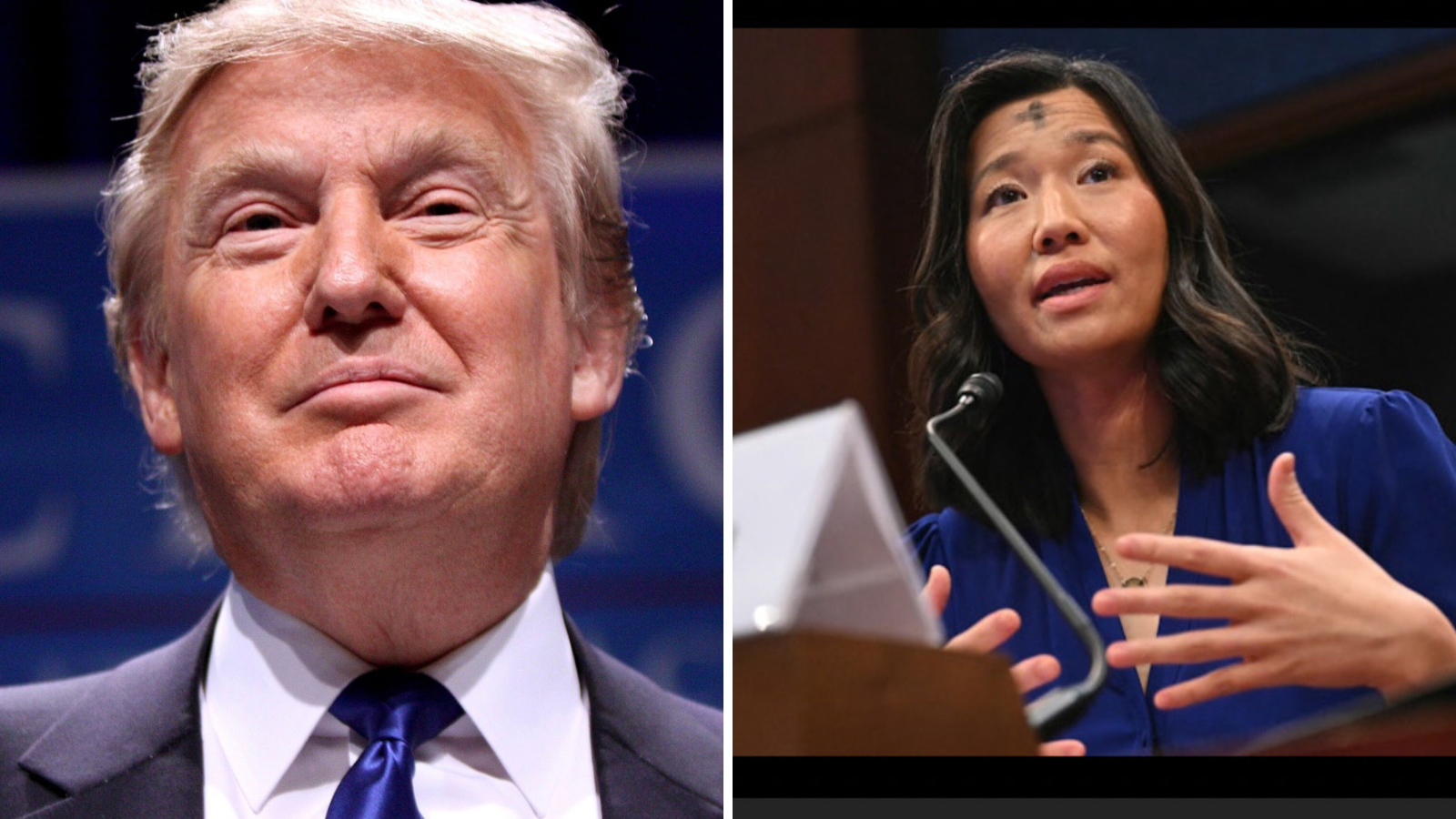
BOSTON — Boston Mayor Michelle Wu escalated her feud with Washington on Monday, SUING President Trump’s administration after federal housing officials moved to overhaul the city’s homelessness funding — a fight that now has Wu warning that 1,100 homeless people could be pushed onto the streets, first reported by the Boston Herald.
The lawsuit challenges sweeping changes to HUD’s Continuum of Care program, which delivered roughly $48 million to Boston this year for permanent supportive housing. The Trump administration argues the previous system funneled money into a “failed” Housing First model, lacked accountability, and renewed projects without measuring results.
Under the new rules, Boston stands to lose nearly $29 million in funding for permanent supportive housing, a category the city has heavily relied on. City Hall says the cuts would dismantle long-standing programs that stabilize some of Boston’s most vulnerable residents.
Wu blasted the changes as “dangerous” and “unlawful,” claiming the overhaul could “leave more than 1,100 Bostonians homeless” if the funding dries up ahead of winter.
“Permanent supportive housing has been a key to tackling homelessness and keeping Bostonians stable,” Wu said in a statement.
MASSDAILYNEWS
STAY UPDATED
Get Mass Daily News delivered to your inbox
ADVERTISEMENT · Interested in advertising?
ADVERTISEMENT · Interested in advertising?
Housing chief Sheila Dillon warned that hundreds of residents living in long-term supportive units — including veterans, older residents, and people with disabilities — could lose housing if the federal rules stand. “Without these grants, people who rely on permanent supportive housing could lose the homes that have helped them rebuild their lives,” Dillon said.
HUD, meanwhile, delivered a blistering defense of its reforms. In a statement released last month, the agency said the Biden-era system had turned into a “slush fund” that rewarded political posturing over measurable progress. HUD officials said permanent supportive housing consumed more than 90 percent of funding under the old rules, while transitional housing and treatment-based programs received minimal support.
HUD Secretary Scott Turner said cities will now be judged on “how many people achieve long-term self-sufficiency and recovery,” not by dollars spent or units filled. The new framework requires project completion, service-based housing, addiction treatment access, and employment pathways.
The rules also tie funding to compliance with broader federal standards — a shift that places Boston in a complicated position.
Wu has spent years defending sanctuary-style policies, including restrictions under the Boston Trust Act limiting local police cooperation with ICE and repeated pledges that Boston “will not assist” in mass-deportation efforts. Those policies are not named directly in HUD’s overhaul, but they place Boston among jurisdictions whose local rules have long clashed with federal enforcement priorities.
ADVERTISEMENT · Interested in advertising?
ADVERTISEMENT · Interested in advertising?
The lawsuit argues that HUD cannot impose new conditions without congressional approval and says the reforms could destabilize programs serving families, people with disabilities, and older residents.
The battle comes as Boston confronts record homelessness numbers, rising shelter costs, and continued pressure on its migrant support system — now intensified by a national policy shift that threatens hundreds of local housing placements.
For now, Boston’s homelessness network sits squarely in the middle of a Washington-driven storm.
And Wu is fighting two forces at once: Trump in court — and the winter on the ground.
Loading Comments